Argan Oil Uncovered: Eco-Friendly Haircare Ingredient Deep-Dive

Argan oil is a highly sought-after ingredient in eco-friendly haircare products due to its nourishing properties and sustainability. Here’s more about this unique oil…
This natural oil, derived from the kernels of the argan tree, is rich in essential fatty acids and vitamin E, making it an excellent choice for moisturizing and revitalizing hair. For those interested in the environmental impact of their beauty products, argan oil sustainability is a crucial factor to consider, as it supports fair trade practices and helps preserve the unique argan forest ecosystem.
Article-At-A-Glance:
- Argan oil is extracted from the kernels of the argan tree, native to Southwestern Morocco, and has been used for centuries as a powerful natural beauty treatment.
- Rich in vitamin E, antioxidants, and essential fatty acids, argan oil penetrates deep into hair strands to reduce frizz, seal cuticles, and add mirror-like shine.
- The global argan oil market has real sustainability stakes — how it’s sourced directly impacts Moroccan ecosystems and local women’s communities.
- Not all argan oil products are created equal — there are key differences between pure cold-pressed argan oil and diluted formulations you’ll want to know before buying.
- Keep reading to discover exactly how to use argan oil in your routine, and what to look for when choosing a product that’s both effective and ethically made.
Argan oil might just be the most versatile natural haircare ingredient on the planet — and the eco-friendly story behind it makes it even more worth paying attention to.
Sourced from a tree that grows almost exclusively in one region of the world, argan oil has crossed centuries of Moroccan tradition to land on bathroom shelves globally. It’s not just hype. The oil carries a genuinely impressive nutritional profile that supports hair health at a structural level — and when it’s ethically produced, it supports people and ecosystems too. For anyone exploring natural beauty solutions, understanding where argan oil comes from and how to use it is the kind of knowledge that pays off every wash day!
:max_bytes(150000):strip_icc()/argan-oil-with-fruits-155268256-aef0d4bf255b42b997cf00d1c816ea97.jpg)
Image from www.treehugger.com.
Argan Oil Is the Haircare Ingredient You Actually Need
Before diving into the science, here’s a quick snapshot of what makes argan oil stand apart from other natural oils flooding the beauty market:
- Absorbs into hair strands without leaving greasy residue
- Works on virtually every hair type — from fine and straight to thick and coily
- Doubles as a heat protectant, leave-in conditioner, and deep treatment mask
- Carries genuine antioxidant properties that protect hair from environmental damage
- Sourced through a production process that, when done right, actively supports Moroccan biodiversity
The ingredient listed on product labels as Argania Spinosa Kernel Oil is the real deal — a cold-pressed oil derived from the kernels inside the hard nuts of the argan tree. Ingredients are listed by predominance on product labels, so the closer it appears to the top of the list, the more actual argan oil is in the formula.
What Argan Oil Is and Where It Comes From
Argan oil is a pale yellow oil packed with fatty acids and vitamins A and E, cold-pressed from the kernels inside the fruit of the argan tree. It has a rich, centuries-old history in Moroccan culture, where it has long been used to protect skin and hair against the dry, harsh North African climate. What was once a regional beauty secret is now one of the most sought-after ingredients in modern haircare worldwide.
The Argan Tree: Native to Southwestern Morocco
The argan tree (Argania spinosa) grows almost exclusively in the Souss-Massa-Drâa region of Southwestern Morocco. It’s a slow-growing, deeply resilient tree that thrives in semi-arid conditions where few other plants survive. Each tree can live for up to 200 years, producing fruit annually — but only in limited quantities, which is part of what makes genuine argan oil a premium product.
How Argan Oil Is Extracted from the Kernel
The process starts with harvesting the fruit of the argan tree. The soft outer flesh is removed to reveal a hard nut inside, and within that nut are one to three small kernels. Those kernels are then cold-pressed and filtered to produce the pure oil used in haircare and cosmetic formulations. Cold-pressing is the critical factor here — it preserves the oil’s full nutrient profile, including its heat-sensitive vitamins and fatty acids, without the use of chemical solvents.
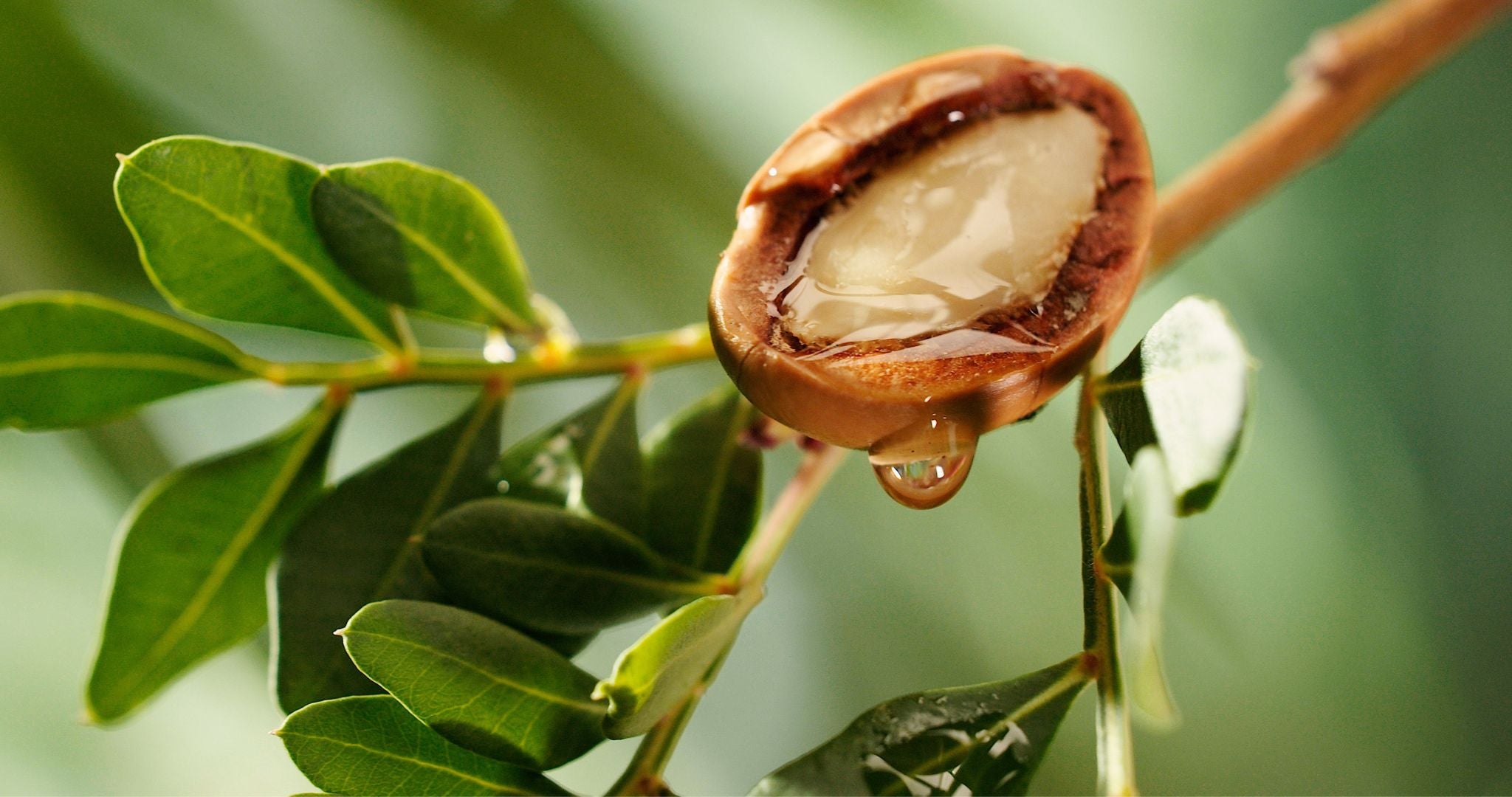
Image from livnature.com.
Why the Arganeraie Biosphere Reserve Matters
In 1998, UNESCO designated the argan forest in Morocco as the Arganeraie Biosphere Reserve, recognizing its critical role in preventing desertification and supporting regional biodiversity. The argan tree’s deep root system anchors the soil against Saharan winds, making it an environmental anchor for an entire region. Sustainable harvesting of argan oil is therefore not just an ethical choice — it’s directly tied to the health of this protected ecosystem.
The Science Behind Argan Oil’s Haircare Power
The reason argan oil works so well on hair isn’t magic — it’s chemistry. The oil’s unique combination of nutrients targets hair health at a structural level, from the outermost cuticle layer all the way into the cortex of each strand.
Vitamin E: The Antioxidant That Protects Hair Strands
Vitamin E is one of argan oil’s most powerful components. As a fat-soluble antioxidant, it neutralizes free radicals — the unstable molecules generated by UV exposure, heat styling, and pollution that degrade hair proteins over time. By doing so, vitamin E helps preserve the integrity of each strand, reducing brittleness and protecting color-treated hair from premature fading.
Beyond antioxidant protection, the vitamin E in argan oil actively strengthens hair. It works by reinforcing the hair fiber itself, which is why regular use tends to result in visibly less breakage and snapping — particularly at the ends, where hair is oldest and most fragile.
Essential Fatty Acids and Deep Moisture Penetration
Argan oil is rich in oleic acid (omega-9) and linoleic acid (omega-6) — two essential fatty acids that have small enough molecular structures to penetrate the hair shaft rather than just coating the surface. This is the key difference between argan oil and heavier oils that sit on top of hair and create that unwanted greasy look. The fatty acids absorb efficiently, delivering moisture directly where it’s needed most.
How Argan Oil Seals the Hair Cuticle
The hair cuticle is the outermost protective layer of each strand, made up of overlapping scale-like cells. When those scales are raised — from heat damage, chemical processing, or even hard water — hair becomes frizzy, dull, and prone to tangling. Argan oil’s fatty acids bond with the damaged cuticle cells and smooth them flat, effectively sealing the cuticle. The result is visibly smoother hair with a mirror-like shine, and significantly reduced frizz — without any synthetic silicone coating.
Key Hair Benefits of Argan Oil
The practical benefits of argan oil map directly onto its nutrient profile. This isn’t a case of beauty marketing getting ahead of the science — each claimed benefit has a clear biochemical mechanism behind it.
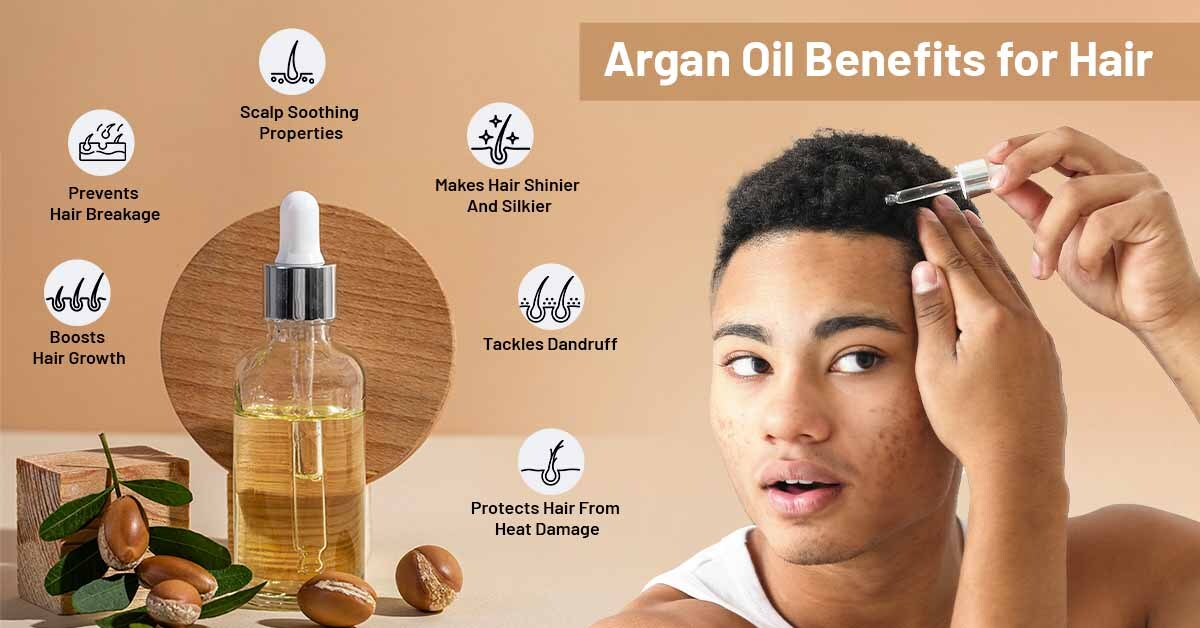
Image from www.formen.health.
Frizz Reduction and Split End Sealing
Frizz happens when the hair cuticle is raised and moisture from the air enters the strand unevenly. Argan oil tackles this at the source — its fatty acids smooth the cuticle flat and create a lightweight barrier that resists humidity without stiffness or crunch. For split ends, the oil physically bonds fragmented cuticle cells together, making ends appear sealed and healthier while you work on growing out the damage.
Mirror-Like Shine Without Greasy Residue
One of argan oil’s most distinctive qualities is the quality of shine it delivers. Because the oil absorbs into the hair shaft rather than sitting on top of it, it reflects light from a smooth, flat cuticle surface — which creates that deep, glass-like shine associated with healthy hair. Two to three drops on dry hair after styling is genuinely all you need. More than that and you risk oversaturation, particularly on fine hair types.
Reduced Breakage and Stronger Strands
Breakage is almost always a sign of compromised hair protein structure — strands that have lost elasticity snap instead of stretch. Argan oil’s vitamin E content directly addresses this by reinforcing the hair fiber, while the fatty acids improve flexibility by maintaining optimal moisture levels inside the strand. Together, they make hair more resilient under mechanical stress like brushing, detangling, and heat styling.
Regular use over several weeks tends to produce cumulative results. Hair that was previously snapping during detangling sessions often becomes noticeably more manageable as the oil’s nutrients build up in the hair shaft over time.
Scalp Health Support
Healthy hair starts at the scalp, and argan oil has meaningful benefits at the root level too. Its anti-inflammatory properties — driven largely by its antioxidant content — can help soothe an irritated or dry scalp, reducing flakiness without the harsh chemicals found in many medicated shampoos.
The fatty acids in argan oil also support the scalp’s natural lipid barrier. When that barrier is intact, the scalp regulates sebum production more effectively — which means argan oil can actually be useful for both dry scalp conditions and scalp areas that tend to overproduce oil.
For direct scalp application, a small amount warmed between the palms and massaged into the scalp for five minutes before shampooing is an effective approach. The massage itself stimulates circulation, which supports follicle health independently of the oil’s nutrient contribution.
It’s worth noting that argan oil is non-comedogenic, meaning it won’t clog hair follicles — a concern that makes some people hesitant to apply any oil directly to their scalp. This makes it one of the safer natural oils for scalp use across most hair and skin types.
Quick Reference: Argan Oil Benefits by Hair Concern
Hair Concern How Argan Oil Helps Best Application Method Frizz Smooths and seals the hair cuticle Leave-in serum on damp hair Dullness Reflects light from a flat cuticle surface 2-3 drops on dry finished hair Breakage Reinforces hair fiber with vitamin E Pre-shampoo treatment or mask Dry scalp Soothes inflammation, restores lipid barrier Scalp massage before washing Heat damage Acts as a protective thermal barrier Applied before heat styling tools Split ends Temporarily bonds fragmented cuticle cells Focused application on ends
How to Use Argan Oil in Your Hair Routine
The versatility of argan oil is one of its strongest selling points — it genuinely fits into multiple points of a haircare routine without conflict. Whether your hair is fine and straight or thick and coily, the key is always the same: start with less than you think you need and build up from there.
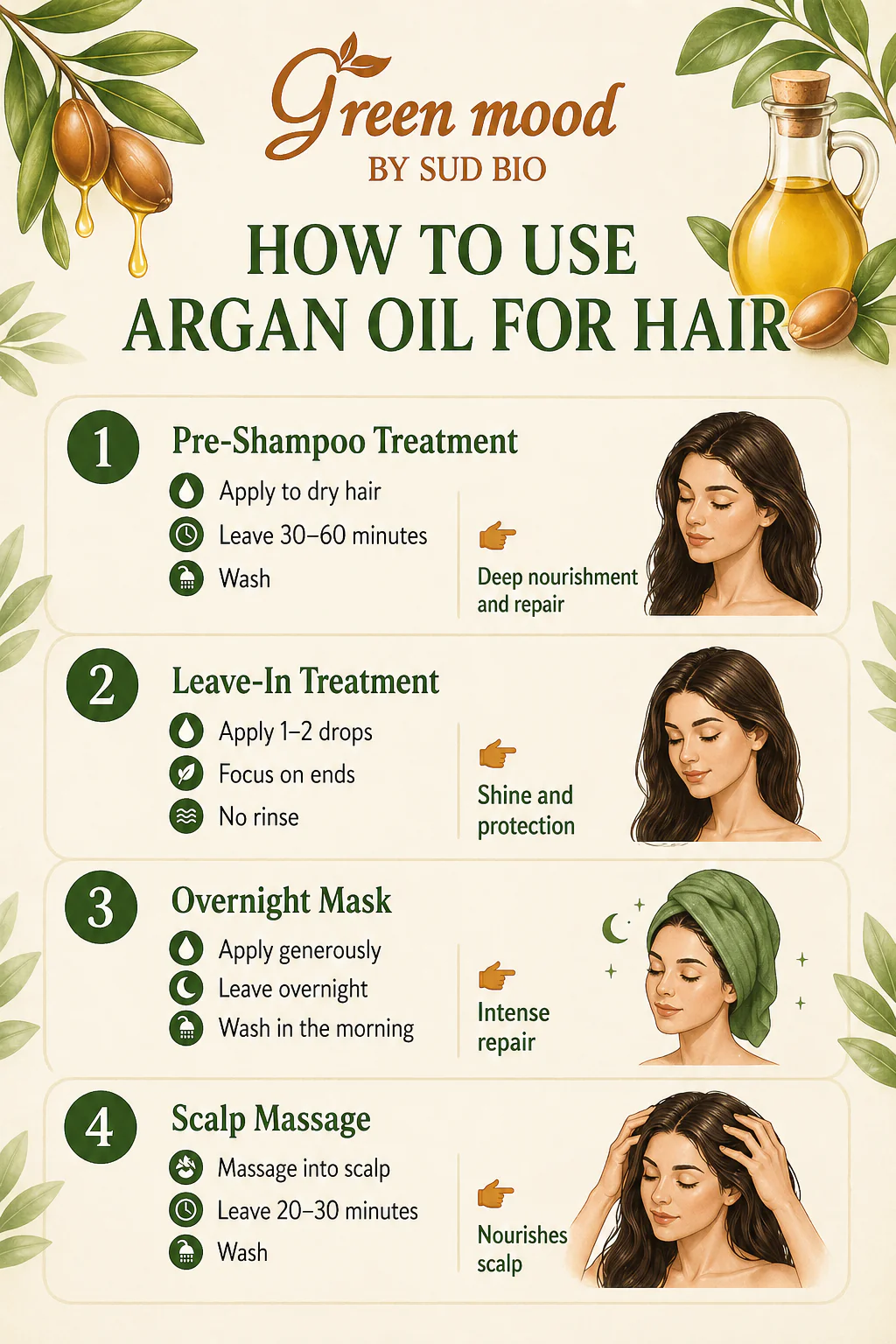
Image from greenmood.ma.
Pure cold-pressed argan oil and argan oil-infused products serve different purposes. Pure oil gives you maximum potency and flexibility in how you apply it. Formulated products — shampoos, conditioners, masks, and serums — deliver argan oil alongside complementary ingredients designed for specific outcomes like color protection or curl definition. Both have a place in a well-rounded routine.
As a Leave-In Serum for Daily Smoothing
This is the most common — and most immediately effective — way to use argan oil. After washing and towel-drying your hair until it’s damp but not dripping, dispense two to three drops of pure argan oil into your palms, rub them together to warm the oil slightly, and work it through your mid-lengths and ends. Avoid the roots unless your hair is very coarse or dry.
The warmth from your palms is actually important here. Slightly warming the oil before application improves its spreadability and helps it absorb more effectively into the hair shaft, rather than just coating the surface. This small step makes a measurable difference in the final result.
For daily use on dry hair between washes, one to two drops applied to the ends controls frizz and adds polish without weighing hair down or creating buildup. This works particularly well as a finishing step after any heat styling.
Argan Oil Dosage Guide by Hair Type
Hair Type Recommended Amount Application Tip Fine / Straight 1-2 drops Focus on ends only, avoid roots Medium / Wavy 2-3 drops Mid-lengths to ends on damp hair Thick / Curly 3-5 drops Section hair and apply evenly throughout Coily / Very Dense 5-6 drops Layer with a water-based leave-in for best absorption
As a Deep Conditioning Hair Mask
For a more intensive treatment, apply a generous amount of argan oil to dry hair from roots to ends, cover with a shower cap, and leave it on for a minimum of 30 minutes — or overnight for maximum effect. The heat trapped under the shower cap opens the hair cuticle slightly, allowing the oil’s fatty acids to penetrate more deeply into the cortex. Shampoo out thoroughly afterward, and the result is noticeably softer, more elastic hair with lasting moisture retention. Once a week is typically sufficient for most hair types, though very dry or chemically processed hair can benefit from twice-weekly treatments.
As a Heat Protectant Before Styling
Argan oil creates a lightweight thermal barrier on the hair surface that helps buffer strands against the direct heat of blow dryers, flat irons, and curling wands. Apply two to three drops to damp hair before blow drying, or a single drop to dry hair before using straightening or curling tools. It won’t replace a dedicated high-temperature heat protectant spray for temperatures above 230°C (450°F), but for everyday styling it provides genuine protection while simultaneously conditioning.
The combination of heat protection and conditioning in one step is one of the reasons argan oil has such strong staying power in natural haircare routines — it streamlines the process without sacrificing results.
The Eco-Friendly and Ethical Side of Argan Oil
The eco-friendly credentials of argan oil go well beyond the fact that it’s a natural ingredient. The full story involves a protected UNESCO biosphere, a fragile semi-arid ecosystem, and tens of thousands of Moroccan women whose livelihoods depend directly on sustainable argan production. When you choose an ethically sourced argan oil product, you’re participating in a supply chain with genuinely meaningful environmental and social consequences.
Conversely, the explosive global demand for argan oil — driven by the beauty industry — has created real pressure on both the argan forest and the communities that depend on it. Not all argan oil products on the market reflect responsible sourcing, which makes it worth understanding what ethical production actually looks like before making a purchase.
The Environmental Role of the Argan Tree
The argan forest covers approximately 800,000 hectares across Southwestern Morocco and serves as a critical buffer against desertification from the encroaching Sahara. The trees’ deep root systems stabilize the soil, reduce erosion, and support underground water retention in an increasingly arid region. Sustainable harvesting — which involves collecting fallen fruit rather than stripping trees — preserves the tree’s fruit-bearing capacity year after year and maintains the forest’s ecological function. Industrial overproduction or unsustainable harvesting practices directly threaten this balance.
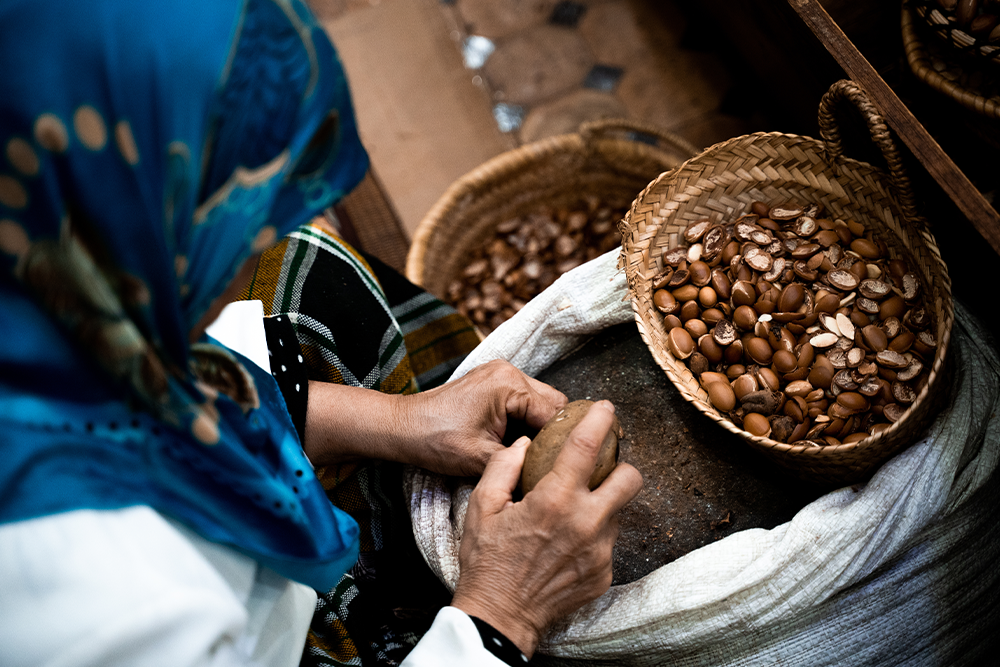
Image from safwahnatural.com.
Women’s Cooperatives and Ethical Production in Morocco
Traditional argan oil production in Morocco has historically been the work of Berber women, who developed the labor-intensive extraction techniques passed down through generations. Today, dozens of women’s cooperatives across the Souss region — many supported by organizations like the Anaruz Network — continue this tradition while providing fair wages, safe working conditions, and economic independence to thousands of rural women.
When argan oil is sourced through these cooperatives, the economic benefit stays within the local community rather than being absorbed by large-scale commercial operations. Products that carry certifications like Fair Trade or that explicitly name their cooperative source on packaging are the clearest indicators that the supply chain supports rather than exploits the communities behind the oil’s production.
The Impact of a $223.9 Million Global Market on Sustainability
The global argan oil market has grown into a significant commercial force, with its value reflecting the worldwide appetite for this Moroccan ingredient in beauty, food, and wellness products. That scale of demand creates a double-edged reality: it generates vital income for Moroccan communities, but it also puts pressure on a finite natural resource growing in a protected biosphere. The math is straightforward — more demand means more harvesting pressure on a tree that produces limited fruit and takes decades to mature.
The sustainability challenge isn’t unique to argan oil, but the stakes are particularly high given the argan forest’s role in preventing desertification. Industry organizations and Moroccan government bodies have implemented harvesting guidelines and certification programs to manage this tension, but consumer choices remain one of the most direct levers available. Buying from brands that invest in certified sustainable sourcing actively funds the infrastructure that keeps production within ecological limits.
What Organic Argan Oil Means and Why It Matters
Organic certification for argan oil means the trees were grown without synthetic pesticides or fertilizers, and the oil was processed without chemical solvents — preserving both the oil’s nutrient integrity and the surrounding soil health. The ECOCERT and COSMOS organic standards are the most recognized certifications to look for on argan oil products sold in Europe and North America. Crucially, organic certification also typically requires traceability back to the source, which makes it harder for unethical suppliers to enter the chain undetected.
What to Look for When Buying Ethical Argan Oil Products
Navigating argan oil products on a crowded market shelf is easier when you know what signals to look for. The ingredient list is your first checkpoint — Argania Spinosa Kernel Oil should appear near the top of the list, not buried beneath a long list of synthetic fillers. For pure argan oil, the only ingredient should be Argania Spinosa Kernel Oil, full stop. A dark amber glass bottle is another positive indicator, since UV light degrades the oil’s vitamin content over time and responsible producers package accordingly.
Beyond the label, look for explicit mentions of cooperative sourcing, Fair Trade certification, or named Moroccan producer partnerships. Price point is also a useful signal — genuinely cold-pressed, ethically sourced argan oil cannot be produced cheaply given the labor-intensive extraction process. Products priced significantly below market average for pure argan oil are almost certainly either heavily diluted or sourced through supply chains that cut corners on both quality and ethics.
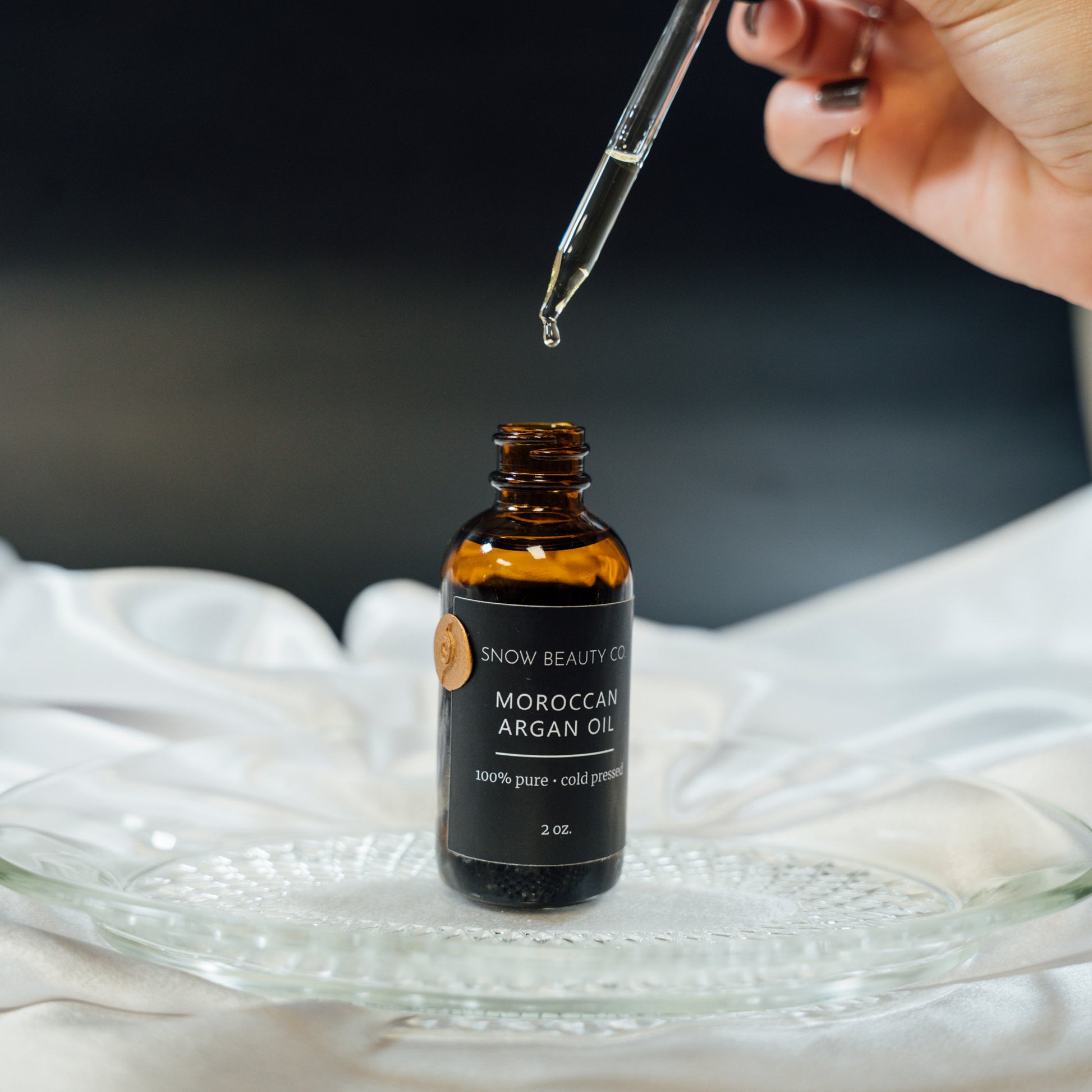
Image from hopesgate.org.
Argan Oil Is Worth Every Drop — If You Source It Right
Argan oil earns its reputation at every level — from the biochemistry of what it does inside a hair strand to the centuries of Moroccan tradition behind how it’s made. The vitamin E, essential fatty acids, and antioxidants aren’t just marketing language; they’re measurable compounds with documented effects on hair health. Frizz reduction, cuticle sealing, breakage prevention, scalp support, and heat protection are all real, achievable outcomes from consistent use of quality argan oil.
But the full value of this ingredient only materializes when the sourcing is right. Cold-pressed, organically certified, cooperatively produced argan oil delivers on every promise — for your hair, for the Moroccan women who produce it, and for the argan forest ecosystem that makes it all possible. That’s not a small thing. It makes argan oil one of the rare beauty ingredients where choosing well for your hair and choosing well for the world are exactly the same decision.
Frequently Asked Questions
The most common questions about argan oil in haircare tend to come down to the same core concerns: suitability, frequency, product quality, ethics, and sourcing. Here are straightforward answers to each.
Is argan oil suitable for all hair types?
Yes — argan oil is one of the most universally compatible natural hair oils available, largely because of its non-greasy absorption profile. Its lightweight molecular structure means it absorbs into the hair shaft efficiently across all hair textures without leaving the heavy residue that makes some oils impractical for finer hair types.
That said, the application method and amount should be adjusted based on your specific hair type. Here’s a simple breakdown:
- Fine or straight hair: Use one to two drops maximum, focused on ends only. Avoid the roots entirely to prevent the appearance of oiliness.
- Wavy or medium-density hair: Two to three drops from mid-lengths to ends works well as a leave-in treatment on damp hair.
- Thick or curly hair: Three to five drops applied in sections ensures even distribution through denser strands.
- Coily or very dense hair: Five to six drops, ideally layered over a water-based leave-in conditioner for maximum penetration and moisture retention.
- Color-treated or chemically processed hair: Argan oil is particularly beneficial here — its antioxidant content helps protect color integrity while the fatty acids compensate for the moisture stripped during chemical processing.
The one scenario that warrants a patch test first is a known nut allergy, since argan oil is derived from the kernel of the argan tree nut. Reactions are rare and argan oil is generally considered safe for topical use, but it’s a reasonable precaution for anyone with a documented tree nut sensitivity.
How often should you use argan oil on your hair?
For leave-in serum application — a few drops on damp or dry hair — daily use is perfectly appropriate for most hair types and won’t cause buildup when used in the right amounts. The key is starting conservatively and increasing only if your hair needs more.
For deep conditioning mask treatments, once a week is the standard recommendation for normal to moderately dry hair. Hair that is very dry, heavily processed, or heat-damaged can benefit from two treatments per week until condition improves, then scaling back to a weekly maintenance schedule.
What is the difference between pure argan oil and argan oil in haircare products?
Pure argan oil is exactly that — 100% cold-pressed Argania Spinosa Kernel Oil with nothing added. It’s the most potent form of the ingredient and gives you complete control over how much you use and how you apply it. It’s also the most cost-effective option per application, since a small bottle of pure oil goes a long way.
Argan oil-infused haircare products — shampoos, conditioners, masks, serums, and sprays — combine argan oil with other ingredients specifically formulated to work together for a targeted outcome. A good argan oil shampoo, for example, will cleanse without stripping the fatty acids that argan helps restore. An argan oil mask may combine it with proteins, humectants, or other conditioning agents that address damage more comprehensively than oil alone.
The trade-off is concentration. In formulated products, argan oil is one ingredient among many, and its potency depends entirely on where it sits in the ingredient list. A product where Argania Spinosa Kernel Oil appears in the first five ingredients will deliver meaningfully more benefit than one where it appears near the bottom alongside fragrance and preservatives.
Neither format is inherently superior — the best approach for most people is to use both. A pure oil for targeted leave-in or treatment applications, and a quality argan oil-infused shampoo and conditioner as the base of the routine, gives you both the concentrated benefits and the complementary formulation support.
Pure Argan Oil vs. Argan Oil-Infused Products: At a Glance
Factor Pure Argan Oil Argan Oil-Infused Products Concentration 100% active ingredient Varies — check ingredient list position Best use Leave-in serum, mask, heat protectant Daily cleansing and conditioning routine Control over dosage Full control Pre-determined by formulation Cost per application Very economical Higher per use but adds complementary benefits Ideal for Targeted treatment, frizz control, shine Overall hair health, structured routine Key thing to check Cold-pressed, single ingredient label Argania Spinosa Kernel Oil near top of list
Is argan oil vegan and cruelty-free?
Pure argan oil is vegan — it’s a plant-derived ingredient extracted from the kernel of a tree nut with no animal products involved in its production. Most pure argan oil products are also cruelty-free by nature, though it’s always worth checking whether a brand’s broader product testing policies align with cruelty-free standards. For formulated haircare products, check the full ingredient list and look for certified vegan and cruelty-free logos, as other ingredients in the formula may not meet the same standard as the argan oil itself.
How do you know if an argan oil product is sustainably sourced?
The most reliable indicators of sustainable sourcing are third-party certifications and transparent supply chain disclosures. Look specifically for ECOCERT, COSMOS Organic, or Fair Trade certification marks on the packaging. These require verified auditing of production practices, not just marketing claims.
Beyond certifications, brands that name their Moroccan cooperative partners — rather than using vague phrases like “ethically sourced” without substantiation — are demonstrating a level of supply chain transparency that signals genuine commitment. A brief search of the brand’s website for their sourcing story will quickly reveal whether they can back up their claims with specifics.
Dark amber glass packaging is a practical sustainability signal too. It protects the oil’s potency while indicating that the producer is serious about product quality — and responsible producers who invest in cooperative sourcing tend to invest equally in quality packaging.
When in doubt, the price is a reliable proxy. Genuine cold-pressed argan oil sourced through fair-wage cooperatives has real production costs attached. A product that seems too affordable to reflect that reality almost certainly doesn’t.
For more expert guidance on natural haircare ingredients and eco-conscious beauty solutions, exploring the resources in our eco-friendly haircare section is a great next step — they bring the same depth of knowledge to every natural ingredient and sustainable brand worth knowing about.
Featured Image from wimpoleclinic.com.


