Composting Made Simple: A Urban Dweller’s Guide to Reducing Waste At Home

One of the best & easiest ways to reduce food waste is to make compost. Here’s a helpful guide to composting in the city – even if you don’t have a backyard!
Your banana peel doesn’t belong in a landfill—it belongs in a garden!
If you live in a city apartment, you’ve probably assumed composting is off the table. No backyard, no space, no time. But that assumption is costing you a chance to turn everyday kitchen scraps into something genuinely useful, all while cutting down on the trash bags piling up at the curb. Composting for city apartments isn’t just possible, it’s simpler than most people think once you know the right setup.
Before diving into the how-to, it helps to understand why this small habit carries such big weight. Groups like Kompost Kitchen have been helping urban households rethink what “trash” even means, showing that a five-gallon bucket under your sink can do more for the planet than you’d expect.
Article-at-a-Glance:
- Composting turns food scraps into fertile soil, and you don’t need a yard to do it.
- Food waste makes up 20-30% of household trash, and most of it can be composted instead of landfilled.
- Apartment dwellers can compost using worm bins, city green bin programs, private pickup services, or community gardens.
- Rotting food in landfills releases methane, a greenhouse gas far more potent than carbon dioxide.
- Keep reading to find out exactly what belongs in your compost bin and what should never go near it.
Your Kitchen Scraps Are Worth More Than You Think
Every apple core, coffee ground, and wilted lettuce leaf you toss in the trash has a second life waiting for it. Instead of decomposing uselessly in a landfill, that same scrap can become nutrient-rich soil capable of growing your next tomato plant or feeding a community garden! City living doesn’t cancel that possibility out; it just changes what the process looks like.

Image from www.tasteofhome.com.
What Compost Actually Is
Compost sounds technical, but it’s really just organic material broken down into a natural fertilizer. Think of it as nature’s recycling system, one that turns waste into something plants actively want.
Organic Fertilizer Made From Food Scraps
At its core, compost is organic fertilizer made from food scraps (or garden waste). It’s not some mysterious chemical process. It’s decomposition, sped up and organized so the end result is usable, nutrient-dense soil rather than a rotting mess.
This means the produce you didn’t get around to eating, the vegetable peels, and even the stems you’d normally toss without thinking twice all have a purpose beyond the trash can.
How Compost Turns Waste Into Fertile Soil
Compost works by taking food waste and vegetable scraps and transforming them into fertile soil that helps grow more food. It’s a closed loop: scraps go in, soil comes out, and that soil supports new plant growth. For city dwellers, this cycle can happen in a bucket on a balcony or under a kitchen sink, no farmland required!
Why Composting Matters for City Living
Composting isn’t just a feel-good activity. It solves a measurable, well-documented problem with how cities handle waste. For more insights, check out this Composting 101 guide.
Food Scraps Make Up 20-30% of Household Trash
Food scraps account for roughly 20 to 30 percent of what people throw away. That’s a substantial chunk of the average household’s garbage that could be diverted before it ever reaches a landfill truck.
Methane Emissions From Food Rotting in Landfills
Here’s where it gets serious: when food decomposes in a landfill, it emits methane, a greenhouse gas far more powerful than carbon dioxide. Landfills aren’t designed with the oxygen flow needed for clean decomposition, so instead of breaking down efficiently, buried food waste ferments and releases this potent gas into the atmosphere.
Composting sidesteps this entirely by allowing decomposition to happen the way nature intended, with airflow and balance, instead of trapped underground.
Nearly 60% of Daily Waste Comes From Your Kitchen
Nearly 60 percent of the waste generated every day comes from kitchens, and nearly all of it is compostable. That statistic alone should reframe how you think about your trash bin. The majority of what’s filling it up isn’t packaging or plastic, it’s food that could be composted instead!
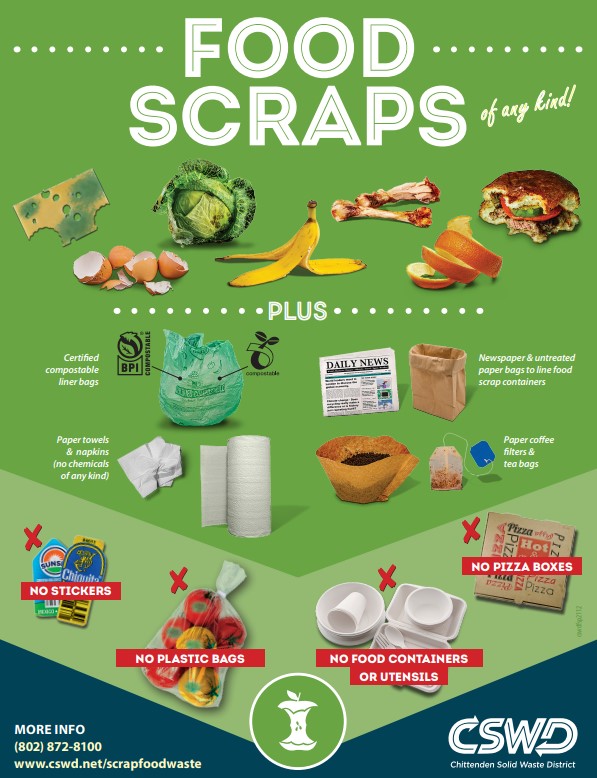
Image from cswd.net.
How Composting Eases the Burden on Landfills
Simple home composting effectively reduces the burden on landfills while creating living soil to grow food. It’s a rare win-win: less waste going out, more usable soil coming back. For a city apartment dweller, that might mean smaller trash bags, fewer trips to the dumpster, and a small but real contribution to reducing citywide landfill strain.
The Health Cost of Ignoring Landfill Waste
Landfill overflow doesn’t just sit quietly out of sight. It creates ripple effects that reach far beyond the dump site itself, often into the communities living closest to it.
Soil, Water, and Air Pollution Near Landfill Sites
Decomposing waste in landfills doesn’t stay contained. Runoff and gas emissions seep into surrounding soil and air, gradually degrading the environment around these sites. The more organic waste that ends up there, the worse this compounding effect becomes.
Contaminated Water and Vegetables Affecting Nearby Communities
Communities near landfill sites often deal with contaminated water supplies and compromised soil, which can affect the safety of locally grown vegetables. It’s an uncomfortable reminder that what gets thrown away in one part of a city doesn’t just disappear. It resurfaces, sometimes in the very food and water systems people depend on.
What You Can Toss in Your Compost Bin
Not sure where to start? The good news is that composting is far more forgiving than people expect. You don’t need special ingredients or complicated formulas, just a basic understanding of what breaks down well.
You can compost pretty much any food scraps, including produce that’s past its prime. That wrinkly bell pepper or bruised banana sitting in your fridge doesn’t need to go straight to the trash. It’s actually prime compost material!
The trick to good compost is balance. You need a mix of “browns” and “greens,” two categories that work together to create the right environment for decomposition.
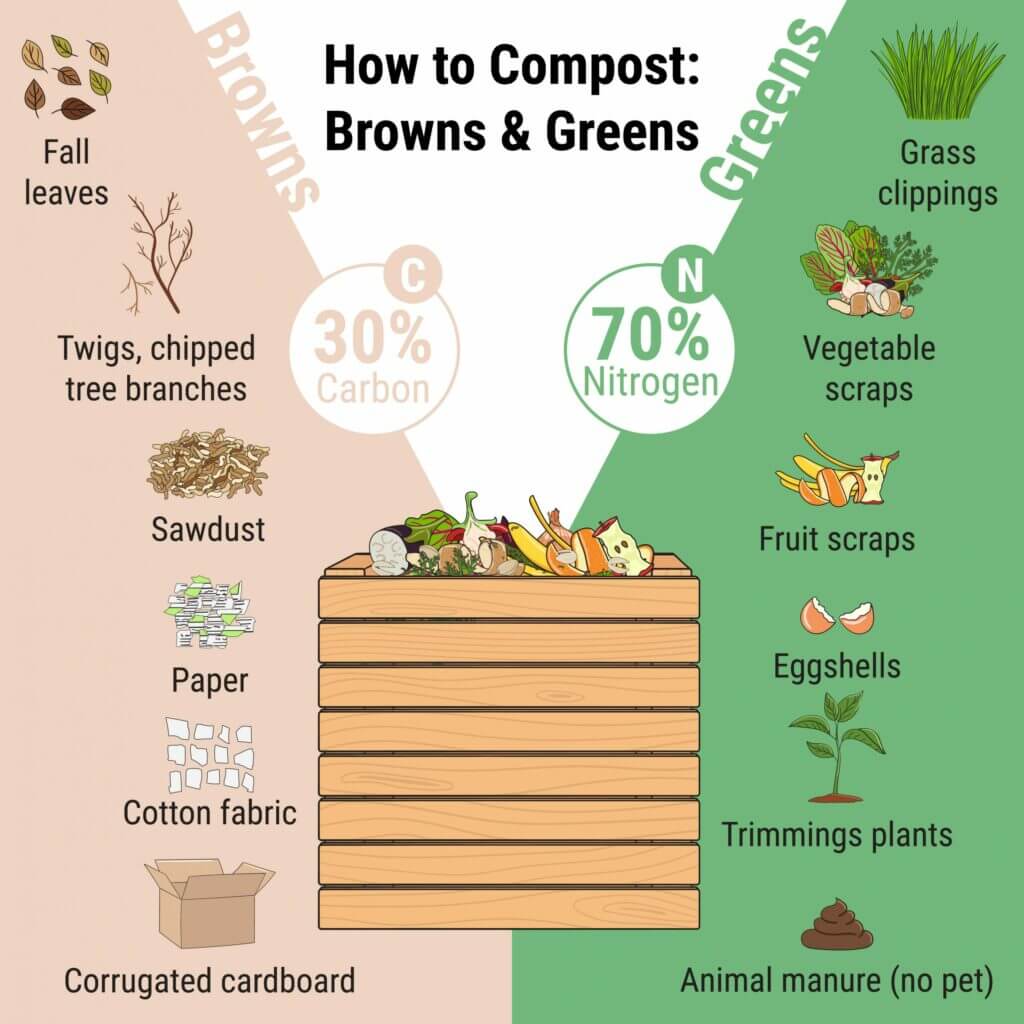
Image from powerknot.com.
Produce Scraps: Peels, Pits, and Cores
Compostable produce parts include avocado pits, citrus peels, and apple cores. Basically, if it once grew from the ground, it can usually go back into the soil in some form. These scraps are typically classified as “green” materials because of their moisture and nitrogen content.
Brown Materials: Newspaper, Wood Chips, and Dried Leaves
Brown, or carbon-rich, components for composting include newspaper, wood chips, dried leaves, and straw. These materials might seem like an odd addition to a food-based system, but they play a critical role in balancing moisture and preventing your compost from turning into a soggy, smelly mess.
Think of browns as the structure of your compost pile. Without them, the whole system gets too wet and starts to break down poorly.
- Shredded newspaper or cardboard (no glossy print)
- Dried leaves collected from your neighborhood sidewalk
- Small wood chips or sawdust from untreated wood
- Straw or dried plant stalks
Keeping a small stash of these on hand, even in an apartment, means you’re always ready to balance out wetter, greener scraps as they come in.
Green Materials: Coffee Grounds and Grass Clippings
Green, or nitrogen-rich, components for composting include food scraps, coffee grounds, grass clippings, and garden waste. These are typically the wetter, more nitrogen-dense materials that break down quickly and feed the microbial activity your compost needs to thrive.
If you’re a coffee drinker, this is good news! Your used coffee grounds don’t need to go down the drain or into the trash. They’re one of the easiest, most consistent green materials you can add to a small-scale compost setup.
Composting Without a Backyard
This is where most apartment dwellers assume they’re out of options. But composting for city apartments has evolved well beyond backyard piles, and there are now several practical paths for people without any outdoor space at all.
Build a Worm Bin From Plastic Buckets
Vermiculture, or worm composting, is one of the most reliable options for apartment living without a backyard. Rather than relying on outdoor space and natural airflow, worm bins use red wiggler worms to break down food scraps indoors, quietly and efficiently.
Worm composting bins can be made from plastic buckets, which means you don’t need to buy an expensive setup to get started. A few stacked buckets with drilled holes, some bedding material like shredded newspaper, and a population of composting worms is enough to create a functioning system under your sink or in a closet.
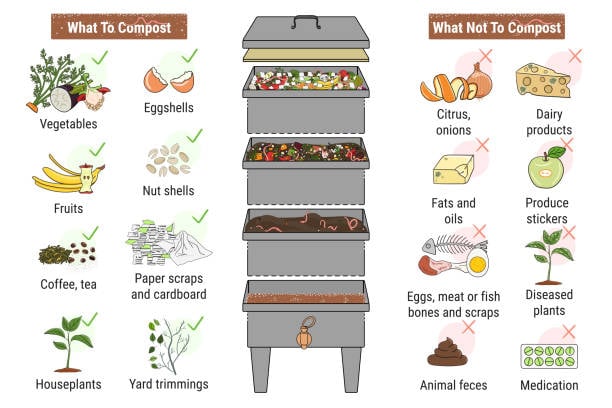
Image from unclejimswormfarm.com.
The process is surprisingly low-maintenance once it’s established. Worms eat through scraps steadily, and the bin doesn’t produce the odor most people fear.
- Two to three stacked plastic buckets with drainage holes
- Shredded newspaper or cardboard for bedding
- A pound of red wiggler worms to start
- A small tray underneath to catch liquid runoff, which doubles as liquid fertilizer
Sign Up for Your City’s Green Bin Pickup
Some cities have green bins that are picked up from houses every week, functioning much like standard recycling pickup but for organic waste. If your building or neighborhood has access to this service, it removes almost all the effort of composting on your end.
- Check with your city’s sanitation department to see if a green bin program exists in your area
- Ask your building management if the service is already available but underused
- Confirm what materials are accepted, since programs vary by city
This option works especially well for renters who don’t have the time or space to manage an active compost system themselves. All the scrap collection happens on your end; the breakdown process happens elsewhere, which is a step towards zero waste living.
It’s also one of the most scalable solutions cities have adopted, since it doesn’t require individual households to have any special equipment.
If your city doesn’t currently offer this, it’s worth raising the question with local representatives. Many programs started because residents specifically requested them.
Hire a Private Compost Pickup Service
Private services exist that will pick up compost from your home, often for a modest monthly fee. These services typically provide you with a small countertop bin or bucket, then swap it out on a set schedule, taking your scraps to a composting facility elsewhere.
This is a solid choice if you want the environmental benefit without managing any of the actual decomposition process. It’s essentially outsourcing the labor while still keeping your food waste out of the landfill.
Drop Off Scraps at a Community Garden
Community gardens may accept compost scraps from residents, giving you a direct, hands-on way to contribute to a local growing space. Many gardens maintain their own compost systems and welcome contributions from neighbors who don’t have a place to compost themselves.
This option also builds a tangible connection to your local food system. You’re not just diverting waste, you’re directly feeding the soil that grows food in your own neighborhood!
Composting When You Have a Yard
If you’re lucky enough to have outdoor space, even a small one, composting opens up further. The methods below work well for anyone with a yard, patio, or shared outdoor area.
Start a Simple Pile and Rotate It
You can build a literal pile of scraps if you have a backyard, watering and rotating it periodically to keep the decomposition process active and balanced.
This is composting in its most basic form: no bins, no fancy equipment, just a designated pile where scraps break down over time. The key is rotation. Turning the pile every week or so introduces oxygen, which speeds up decomposition and prevents the pile from smelling or attracting pests.
Watering is equally important. A pile that’s too dry won’t break down efficiently, while one that’s too wet risks becoming a slimy, anaerobic mess.
Most people find a rhythm within a few weeks, adjusting moisture and turning frequency based on how their specific pile responds to local climate and scrap volume. Eating “ugly” produce is only part of the battle when it comes to reducing waste in our lives.
Choose a Compost Bin or Tumbler That Fits Your Space
Composting bins or tumblers are available in a wide range of shapes and sizes, making it easy to find one that matches your yard’s footprint. Tumblers, in particular, are popular because they make turning the compost far easier than manually flipping a pile with a pitchfork.
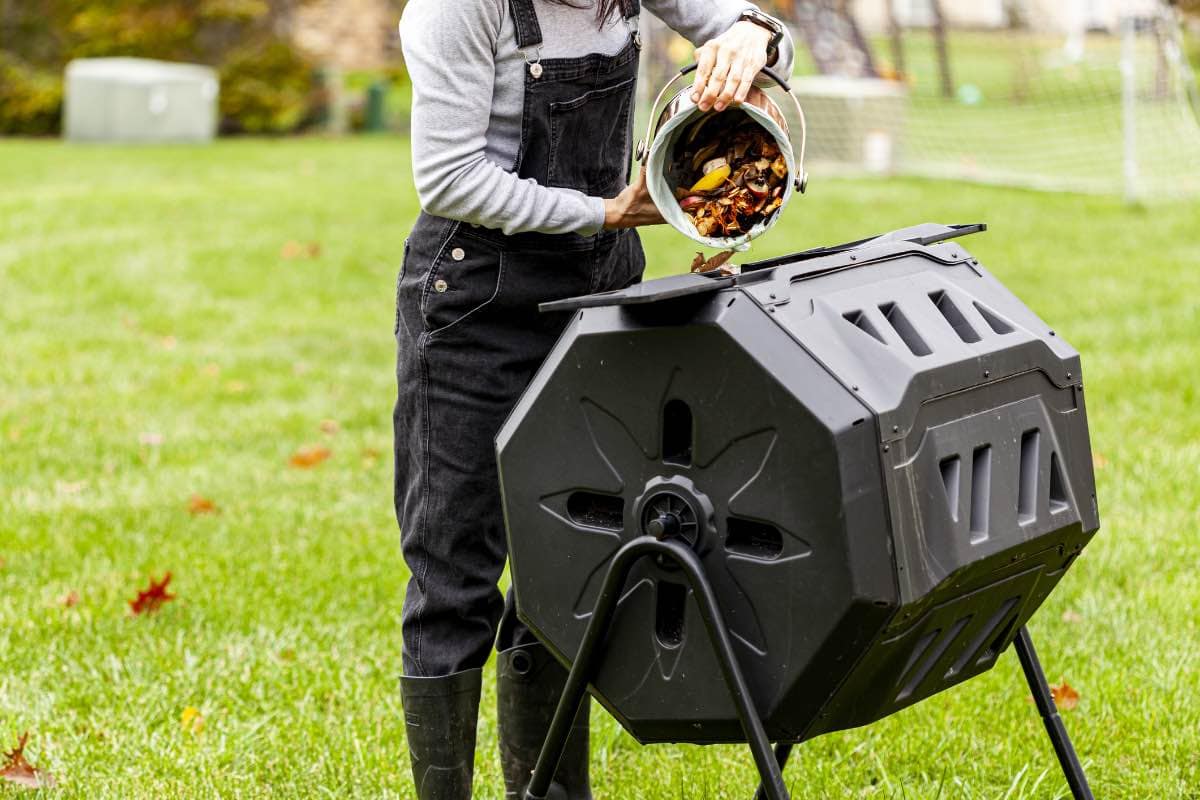
Image from www.planetnatural.com.
Cutting Waste Beyond the Compost Bin
Composting solves the food waste problem, but it’s often the gateway to noticing just how much other unnecessary waste flows through a typical apartment. Once you start separating scraps for compost, the rest of your trash habits tend to come under a much sharper spotlight.
Most city dwellers don’t need a complete lifestyle overhaul to cut down on landfill contributions. Small, repeatable habits stack up fast, especially when they replace single-use items you’re already reaching for daily.
Here are a few simple swaps that pair naturally with a composting routine:
- Keep a reusable water bottle, coffee cup, tote bag, and set of utensils on hand at all times
- Separate trash into three clear categories: compost, recyclables, and true landfill waste
- Swap disposable menstrual products for cloth pads or a menstrual cup
- Buy in bulk when possible to cut down on packaging waste
Carry “The Big Four” Reusables Everywhere
A reusable water bottle, coffee cup, shopping bag, and utensil set cover the vast majority of single-use waste city dwellers generate on an average day. Keeping these four items in your bag or car means you’re rarely caught without an alternative to disposable plastic.
Set Up a Three-Way Waste Segregation System
Once you’re composting, your trash naturally splits into three streams: compostable scraps, recyclables, and everything else. Setting up three small bins in your kitchen, even stacked ones if space is tight, makes sorting automatic instead of a chore you have to think about each time.
Switch to Cloth Pads or Menstrual Cups
Disposable menstrual products contribute significantly to landfill waste over a lifetime, and most aren’t compostable or recyclable. Cloth pads, period undies, and menstrual cups offer a reusable alternative that cuts this waste stream out almost entirely.
For apartment dwellers already composting and segregating waste, this swap tends to feel like a natural next step rather than a big lifestyle change.
What Zero Waste Living Really Means
Zero waste doesn’t mean producing literally no trash. It means being intentional about what you consume, reusing what you can, and diverting as much as possible from landfills through composting and recycling.
Composting is often the single biggest lever in this equation, since food waste makes up such a large share of household trash to begin with.
Small Changes, Zero Landfill Waste
You don’t need a farm, a backyard, or hours of free time to start composting! Whether it’s a worm bin under your sink, a green bin program through your city, or scraps dropped off at a community garden, city apartment living offers more composting options than most people realize.
Every scrap diverted is one less contribution to methane emissions and landfill overflow. Start small, stay consistent, and let the system do the rest.
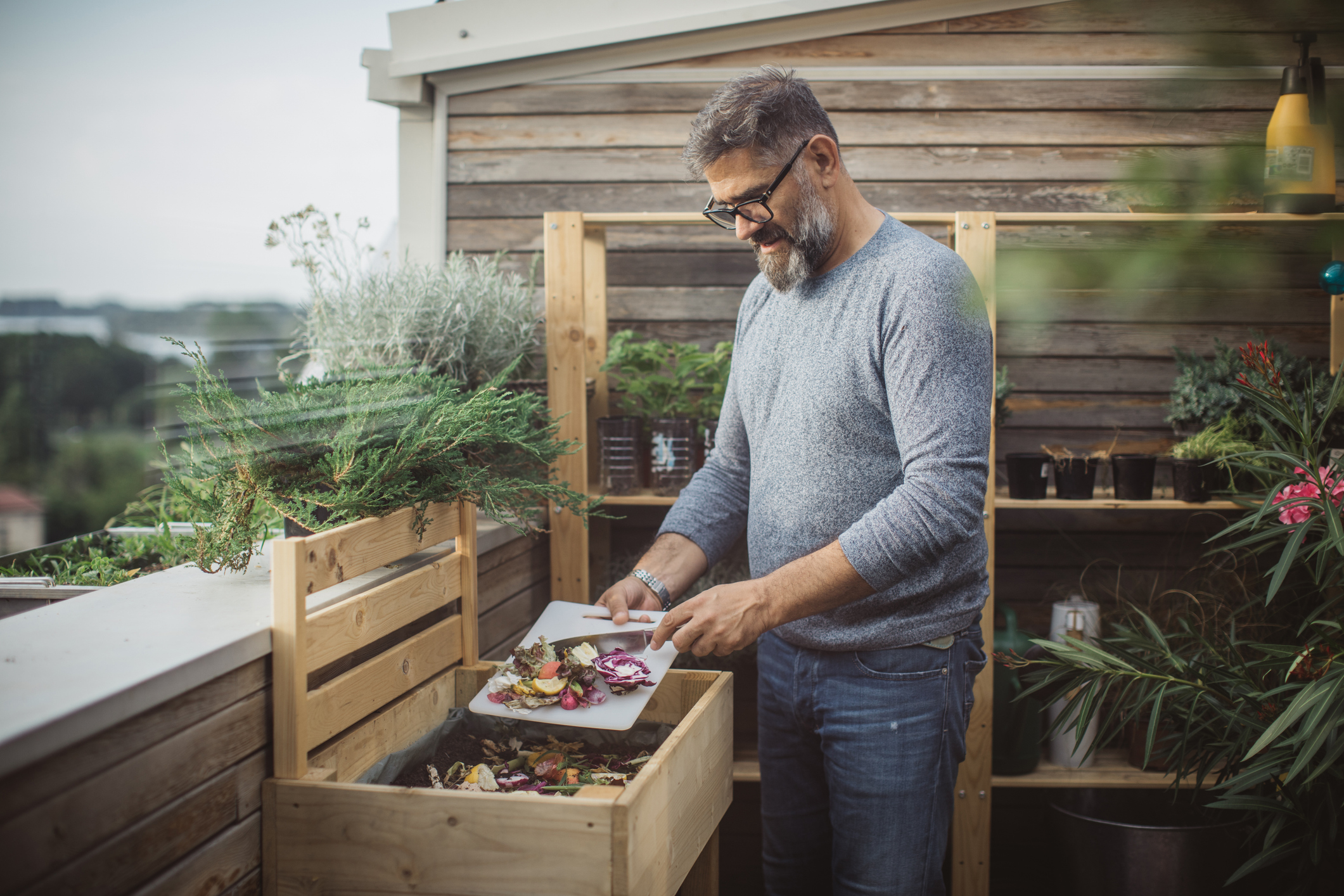
Image from www.gardeningknowhow.com.
Frequently Asked Questions
Composting raises a lot of practical questions, especially for people trying it for the first time in a small space. Here are answers to the ones that come up most often.
Can I Compost in a Small Apartment With No Outdoor Space?
Yes. Worm composting bins, city green bin pickup programs, private compost pickup services, and community garden drop-offs all work without requiring any outdoor space at all. For more information, check out this Composting 101 guide.
Does Compost Smell Bad in My Home?
A properly maintained compost system, whether it’s a worm bin or a sealed countertop container, shouldn’t produce a strong odor. Bad smells usually signal too much moisture or an imbalance between green and brown materials, both of which are easy to correct.
What’s the Difference Between Brown and Green Compost Materials?
Browns are carbon-rich materials like newspaper, dried leaves, and wood chips. Greens are nitrogen-rich materials like food scraps, coffee grounds, and grass clippings. Both are necessary to keep the compost balanced and actively breaking down.
How Long Does It Take for Kitchen Scraps to Turn Into Compost?
Timing depends on the method. Worm bins can process scraps in a matter of weeks, while a backyard pile that’s turned and watered regularly may take a couple of months to fully break down into usable soil.
City programs and pickup services handle this timeline for you, so the scraps you set out are usually turned into compost at a dedicated facility rather than in your own home.
What Should I Never Put in a Compost Bin?
Avoid meat, dairy, oils, and diseased plants, since these attract pests and can disrupt the balance of a home compost system. Sticking to produce scraps, coffee grounds, and approved brown materials keeps the process clean and manageable.
If you’re interested in other sustainable practices, consider reducing waste with a simple DIY project that cuts down on the use of disposable items, like making reusable cloth napkins.
Featured Image from www.spokeandblossom.com.

Related Posts
-
 Infographic: 15 Easy Tips for Sustainable Living
-
 Green Giving: Celebrate Sustainably with Handcrafted Gifts
-
 How to Recycle Your Old Cell Phone
-
 4 Little But Impactful Ways to Live A More Waste-Free Life
-
 8 Spooky & Eco-Friendly Halloween Decoration Ideas
-
 Embrace Autumn: 7 Cozy and Sustainable Zero-Waste Fall Activities & Tips
