Growing Wild Bergamot: A Drought-Tolerant Native Plant With Environmental Benefits

This stunning flower is drought-tolerant & pollinator-friendly & makes a great addition to your native plant garden! Here’s everything you need to know to get started with growing wild Bergamot…
Wild Bergamot At-A-Glance:
- Wild Bergamot (Monarda fistulosa) – commonly known as “Bee Balm,” is a drought-tolerant native perennial that grows 2–4 feet tall and thrives in full sun to partial shade across most of the U.S. and Canada.
- It supports a remarkable range of pollinators, including a bee species — Dufourea monardae — that relies almost exclusively on it for pollen.
- Planting in well-drained soil with good air circulation is the single most important factor in preventing powdery mildew, its only real weakness.
- Wild Bergamot can be started from seed without stratification, making it one of the easiest native plants to establish from scratch.
- Keep reading to discover which companion plants pair best with Wild Bergamot to create a thriving, low-maintenance native garden ecosystem.
If you only add one native plant to your garden this season, make it Monarda fistulosa — Wild Bergamot delivers more ecological value per square foot than almost anything else you can grow!
Wild Bergamot is a flowering perennial in the mint family (Lamiaceae) that has quietly supported North American ecosystems for thousands of years. For native gardening enthusiasts looking to make a real difference, this plant checks every box: it feeds specialist pollinators, resists drought, spreads at a manageable pace, and asks very little in return. Resources like Prairie Moon Nursery have long championed plants like Wild Bergamot as cornerstones of native garden design, and it’s easy to see why once you understand what this plant actually does for the landscape around it.

Image from windflowernatives.com.
What Exactly Is Wild Bergamot?
Wild Bergamot is one of those plants that rewards you the more you learn about it. At first glance, it looks like a cheerful wildflower. Look closer, and it’s an ecological engine.
Scientific Name and Common Names
Monarda fistulosa goes by several common names depending on where you are — Wild Bergamot, Bee Balm, and Horsemint are the most widely used. The “Bergamot” name comes from the similarity of its fragrance to the bergamot orange used in Earl Grey tea. Its leaves carry a distinctive minty, slightly spicy aroma from the aromatic oils in its foliage — oils that also happen to deter certain garden pests.
Native Range Across the U.S. and Canada
Wild Bergamot is native to a remarkably wide geographic area, covering most of the continental United States and Canada, with the exception of California and Florida. This broad native range means that no matter where you garden — whether in the Midwest prairies, the Eastern woodlands, or the dry Rocky Mountain foothills — there is likely a locally adapted ecotype of Monarda fistulosa suited to your conditions. Sourcing plants or seeds from a local or regional native nursery ensures you’re planting the genotype best adapted to your specific climate.
What It Looks Like: Flowers, Height, and Growth Habit
Wild Bergamot grows in an upright, clump-forming habit, typically reaching 2 to 4 feet tall at maturity. Its stems are square — a classic mint family trait — and slightly hairy to the touch. The flowers are tubular, arranged in dense rounded clusters at the tops of the stems, and range in color from soft lavender to pale pink to near-white depending on the ecotype.
Blooming runs from mid-summer through fall, giving your garden weeks of color during a period when many other perennials have already faded. Even after the flowers finish, the dried seed heads hold visual interest well into winter and provide food for goldfinches and other seed-eating birds.

Image from growitbuildit.com.
Why Wild Bergamot Is Exceptional for the Environment
This plant doesn’t just look good — it actively strengthens the ecosystem around it in ways most ornamental plants simply cannot match!
The Specialist Pollinator It Exclusively Supports: Dufourea monardae
Dufourea monardae is a small, solitary native bee that has evolved to collect pollen almost exclusively from Monarda species. This is called oligolecty — a highly specialized foraging behavior where a bee depends on a single plant genus to provision its nests. Without Wild Bergamot and its relatives in the landscape, Dufourea monardae simply cannot complete its life cycle.
Planting Wild Bergamot is one of the most direct actions a gardener can take to support a specialist native bee. No other common garden plant provides this specific ecological function. That alone makes it irreplaceable in a native planting scheme. For those interested in expanding their garden’s benefits, consider learning how to successfully grow medicinal herbs alongside your Wild Bergamot.
How It Feeds Bees, Butterflies, and Hummingbirds
Beyond Dufourea monardae, Wild Bergamot is a generalist magnet for a wide range of pollinators. Its tubular flowers are perfectly shaped for long-tongued bumblebees, and the plant is consistently visited by predatory wasps, hawk moths, Eastern tiger swallowtails, and ruby-throated hummingbirds. The Xerces Society has identified Wild Bergamot as a valuable monarch butterfly nectar plant, featuring it in their Monarch Nectar Plant Guide for the Midwest and several other regional guides.
Its Role as an Ecosystem Anchor Plant
An anchor plant is one that supports so many other species that its presence or absence significantly shapes the surrounding ecosystem. Wild Bergamot functions this way in native meadow and prairie settings. Here’s what it supports beyond its most visible visitors:
- Specialist native bees that cannot forage elsewhere
- Generalist bumblebee colonies that depend on high-volume nectar sources mid-summer
- Predatory wasps that use the nectar for energy while controlling pest insect populations
- Hawk moths, which are important nighttime pollinators often overlooked in garden planning
- Seed-eating songbirds that forage on dried seed heads through winter
When you plant Wild Bergamot, you’re not just adding a flower — you’re adding a node in a living network of species interactions that ripple outward through your entire garden and neighborhood.

Image from www.wilsonbrosgardens.com.
Erosion Control and Soil Health Benefits
Wild Bergamot develops a fibrous root system that binds soil effectively, making it a practical choice for slopes, disturbed areas, and garden edges prone to erosion. The root structure penetrates deeply enough to improve soil aeration over time without the aggressive underground spread seen in some other mint family members.
Because Wild Bergamot is adapted to low-fertility soils, it generally does not require fertilization. In fact, overly rich soils can encourage lush but weak growth that is more susceptible to disease. Letting the plant thrive on lean soil is not neglect — it’s working with the plant’s natural strengths.
Drought Tolerance: How Wild Bergamot Survives With Less Water
One of Wild Bergamot’s most practical qualities is its ability to thrive in dry conditions that would stress or kill most garden perennials. Once established, it is genuinely drought-tolerant — not just “tolerates occasional dryness” tolerant, but capable of surviving extended dry periods on rainfall alone in most regions.
This resilience comes from the plant’s evolutionary history. Wild Bergamot developed in open prairies, dry meadows, and rocky hillsides where summer moisture is unreliable. That history shaped a root architecture and a water management strategy that modern gardeners can put to work immediately.
How Its Fibrous Root System Stores Moisture
Wild Bergamot produces a dense, fibrous root system that spreads horizontally through the upper soil layers while also sending roots deeper to access subsoil moisture. This dual-layer approach means the plant can pull water from a large soil volume, effectively tapping reserves that shallow-rooted annuals simply cannot reach.
The aromatic oils in Wild Bergamot’s foliage also play a functional role beyond fragrance. These oils slow transpiration — the process by which plants lose water through their leaves — helping the plant conserve moisture during hot, dry spells without shutting down growth entirely.
Water Needs During the First Year vs. Established Plants
The first growing season is the one time Wild Bergamot genuinely needs your attention with the watering can. During this establishment window, the root system is still developing its full spread and depth, leaving the plant dependent on consistent surface moisture to get through heat and dry spells.
After the first full season in the ground, the dynamic shifts dramatically. A well-established Wild Bergamot plant requires very little supplemental irrigation, even during summer drought. Understanding this two-phase relationship with water helps you invest effort where it actually matters.
Wild Bergamot Watering Guide
Year One (Establishment): Water regularly — approximately once or twice per week during dry periods. Keep the soil consistently moist but never waterlogged. Focus watering at the base of the plant to maintain good air circulation around the foliage.
Year Two and Beyond (Established): Reduce to supplemental watering only during extended drought periods of two weeks or more. In most regions, natural rainfall is sufficient once the root system is fully developed.
Key Rule: Always water at the base, never overhead. Wet foliage is the primary trigger for powdery mildew, Wild Bergamot’s most common disease problem.
Resist the temptation to keep watering generously after the first season. Established Wild Bergamot in consistently moist, rich soil is actually more disease-prone and produces weaker, floppier stems than plants grown in leaner, drier conditions.
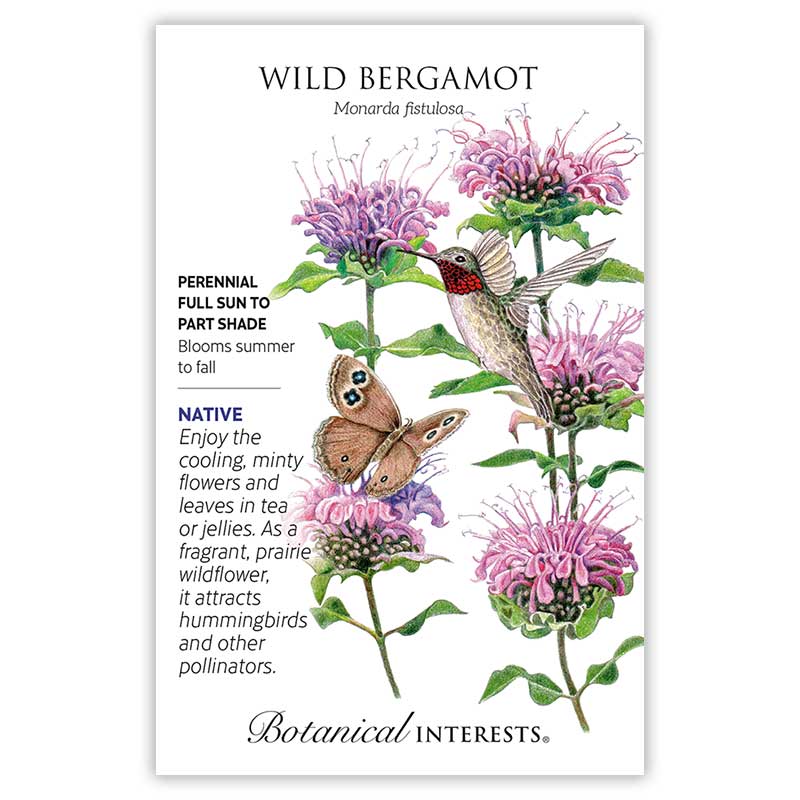
Image from www.botanicalinterests.com.
How to Grow Wild Bergamot Successfully
Wild Bergamot is forgiving and adaptable, but giving it the right starting conditions makes the difference between a plant that merely survives and one that truly thrives — forming full colonies that buzz with pollinators every summer.
Best Soil Types and Sun Requirements
Wild Bergamot grows well in a wide range of soil types, including sandy, loamy, and even clay-heavy soils, provided drainage is adequate. It strongly prefers full sun to partial shade — at least six hours of direct sunlight per day produces the most vigorous flowering. In shadier spots, the plant will grow but tends to become leggy and bloom less prolifically. Good air circulation around the planting site is just as important as sunlight, since stagnant, humid air is the main environmental trigger for powdery mildew.
When and How to Plant
The two best planting windows for Wild Bergamot are mid-spring, after the last frost has passed, and fall, when cooler temperatures reduce transplant stress. Both timing windows give the root system a chance to establish before facing the demands of a full summer bloom cycle.
When planting potted nursery starts, dig a hole roughly twice the width of the root ball and at the same depth. Backfill with the native soil — no amendments needed unless your soil is extremely compacted. Firm the soil gently around the base and water thoroughly immediately after planting.
Site selection is the most important decision you’ll make for this plant. Here’s what you want to shoot for:
- Full sun to partial shade with a minimum of six hours of direct light
- Well-drained soil — avoid low spots where water pools after rain
- Open site with good airflow to reduce humidity around the foliage
- Away from heavy irrigation zones like lawn sprinkler areas
- Lean to moderately fertile soil — avoid heavily amended beds
Spacing and Watering During Establishment
Space Wild Bergamot plants 12 to 18 inches apart. This spacing gives each plant room to develop its clump-forming habit without immediate crowding, while still allowing the colony to fill in naturally over two to three seasons. Tighter spacing speeds up visual coverage but increases the risk of poor air circulation and disease. Water thoroughly after planting and maintain consistent moisture through the first growing season as described above.
How to Grow Wild Bergamot From Seed
Wild Bergamot is one of the easiest native perennials to direct sow from seed — a significant advantage over many other natives that require complex cold stratification protocols before they’ll germinate. Monarda fistulosa seeds do not require stratification, which means you can start them without months of cold treatment in the refrigerator.
You have two practical options for seed starting. The first is an indoor start in late winter, sowing seeds into trays and transplanting seedlings out after the last frost. The second — and often more reliable — approach is direct sowing onto bare soil in early spring once freezing winter temperatures have passed. The seeds are small, so press them lightly onto the soil surface rather than burying them deep.

Image from growitbuildit.com.
Collecting your own seeds from established plants is straightforward and rewarding. Allow the seed heads to fully dry on the plant before harvesting — the heads will turn brown and papery when ready. Then follow these steps:
- Cut the dried seed heads from the stems and place them in a paper bag
- Shake or rub the heads to release the small seeds
- Remove as much chaff as possible by gently blowing or sifting
- Store cleaned seeds in a sealed paper envelope or glass jar in a cool, dry location
- Label with the species name, collection location, and date — especially important if you’re preserving local ecotypes
- Sow the following spring or fall for best germination rates
Wild Bergamot Maintenance Tips
One of the most compelling arguments for growing Wild Bergamot is how little ongoing effort it demands. Once established, the maintenance calendar is genuinely minimal — which makes it ideal for both experienced native gardeners and beginners who don’t want to spend every weekend tending their plants. For more information on how to plant and care for Wild Bergamot, visit this detailed guide.
Fertilization: When It Is and Is Not Needed
In most garden settings, Wild Bergamot does not need fertilizer at all. It evolved in low-fertility soils and performs beautifully without supplemental feeding. The one exception is when growth appears noticeably weak or stunted — pale foliage, minimal stem extension, and poor flowering can indicate genuinely depleted soil. In that specific situation, a light application of a balanced fertilizer in early spring is appropriate. Avoid high-nitrogen formulas, which push excessive leafy growth at the expense of flowers and make plants more susceptible to disease.
How to Prevent and Manage Powdery Mildew
Powdery mildew is the one genuine weakness of Monarda fistulosa, and it’s almost entirely preventable with the right site selection and basic cultural practices. The fungal disease appears as a white, dusty coating on the leaves, typically showing up in mid to late summer when humidity is high and air circulation is poor. It rarely kills the plant outright, but a severe case looks unsightly and weakens the plant heading into fall.
- Plant in open, sunny locations with good airflow — avoid tucking Wild Bergamot against walls, fences, or dense shrubs where air stagnates
- Always water at the base of the plant, never from overhead — wet foliage dramatically increases mildew risk
- Space plants 12 to 18 inches apart minimum to prevent colony overcrowding as the planting matures
- Divide overcrowded clumps every three to four years in spring or fall to restore airflow through the center
- Remove and dispose of heavily infected foliage — do not compost it, as mildew spores can overwinter in plant debris
If mildew does appear despite your best efforts, it’s not a crisis. The plant will still complete its bloom cycle and return healthy the following spring. Cutting back affected stems to about six inches above ground in fall removes the bulk of infected material and gives the plant a clean start in spring.
Some gardeners choose to select more mildew-resistant ecotypes, which are available through specialty native plant nurseries. If powdery mildew has been a persistent problem in your garden — particularly in humid climates — seeking out a locally sourced, mildew-resistant variety of Monarda fistulosa is worth the effort.
How to Collect and Store Seeds for Replanting
Wild Bergamot Seed Collection Calendar
Mid to Late Summer: Flowers finish blooming and seed heads begin to develop. Leave all spent flower heads on the plant — do not deadhead if seed collection is your goal.
Late Summer to Early Fall: Seed heads turn from green to brown and papery. This is the visual signal that seeds are approaching maturity. Check regularly — birds and wind will begin to disperse seeds as soon as they ripen.
Early to Mid Fall: Harvest seed heads by cutting stems just below the head and placing directly into a paper bag. Never use plastic bags for seed storage — trapped moisture causes mold and kills viability.
Storage: Clean seeds by shaking heads in the bag and removing excess chaff. Store in a sealed paper envelope or small glass jar in a cool, dry, dark location. Seeds remain viable for one to two years under proper storage conditions.
Sowing: Direct sow onto bare soil in early spring after hard freezes have passed, or start indoors in late winter. No cold stratification required.
Collecting seed from your own established plants is one of the most rewarding practices in native gardening. Over successive generations, you’re effectively selecting for plants that are adapted to your exact soil, climate, and microclimate conditions — creating a genuinely local ecotype that performs better than anything you can buy from a distant nursery.
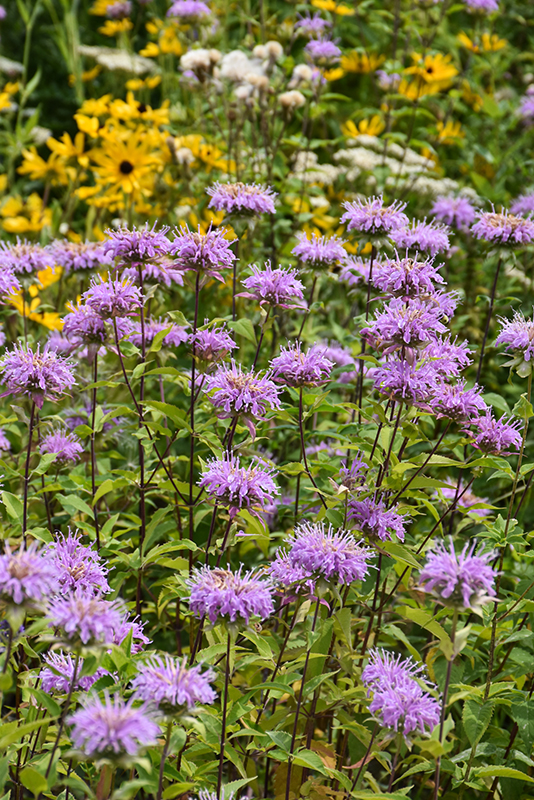
Image from plants.minorsgardencenter.com.
The process is low-effort and high-return. Once you have a seed-producing colony established, you’ll generate far more seeds than you need in a single season, leaving plenty to share with neighbors, donate to seed libraries, or scatter in naturalization areas around your property!
Best Companion Plants for Wild Bergamot
Wild Bergamot performs beautifully in community plantings where it can interact with species that share its cultural preferences — well-drained soil, full to partial sun, and minimal maintenance. Some of the most ecologically effective and visually striking companions include Wild Quinine (Parthenium integrifolia), Purple Coneflower (Echinacea purpurea), Black-Eyed Susan (Rudbeckia hirta), Rattlesnake Master (Eryngium yuccifolium), and Little Bluestem grass (Schizachyrium scoparium). Together, these plants create a layered, multi-season native planting that provides continuous bloom and habitat value from late spring through hard frost.
The pairing with Wild Quinine is particularly worth highlighting. Both plants bloom in a similar window, share the same compact, colony-forming growth habit, and together create a tidy, attractive planting that doesn’t read as “weedy” to neighbors unfamiliar with native plants. Little Bluestem adds warm-season grass texture and brilliant copper-red fall color that contrasts beautifully with Wild Bergamot’s dried seed heads, extending the visual interest of the planting well into winter.
Wild Bergamot Belongs in Almost Every Garden
There are very few native plants that deliver this combination of ecological value, adaptability, low maintenance, and seasonal beauty in a single package. Wild Bergamot does all of it without demanding rich soil, irrigation infrastructure, or years of patient establishment before it performs.
Whether you’re building a full native prairie planting from scratch, adding pollinator value to an existing perennial border, or simply trying to reduce the amount of water and effort your garden demands each summer, Monarda fistulosa belongs in the plan. It works in formal garden settings alongside ornamental companions, in naturalized meadow plantings, and everywhere in between. Here’s a quick summary of what makes it genuinely irreplaceable:
- Supports a specialist native bee (Dufourea monardae) that depends on Monarda species to survive
- Provides high-value nectar for bumblebees, hummingbirds, hawk moths, and monarch butterflies
- Drought-tolerant once established — thrives in lean, well-drained soils without irrigation
- Native across most of the U.S. and Canada — locally sourced ecotypes adapt exceptionally well
- Easy to grow from seed without cold stratification — one of the most beginner-friendly natives available
- Minimal maintenance requirements — divide every few years, cut back in fall, and largely leave it alone
Plant it once, give it a strong first season of establishment, and Wild Bergamot will reward you — and the ecosystem around you — for years to come!

Image from seasonwatch.umn.edu.
Frequently Asked Questions
Here are answers to the most common questions gardeners ask about growing and caring for Wild Bergamot (Monarda fistulosa). If you’re interested in using native plants to enhance your garden, you might also explore growing purple coneflower.
Is Wild Bergamot the Same as Bee Balm?
Wild Bergamot (Monarda fistulosa) and Bee Balm are common names that are often used interchangeably, but “Bee Balm” is also applied to Monarda didyma, a related species with bold red flowers that prefers moister soil conditions. Wild Bergamot specifically refers to Monarda fistulosa, which has lavender-pink flowers, a broader native range, stronger drought tolerance, and a more compact, well-behaved growth habit than Monarda didyma. When purchasing plants or seeds, always check the Latin name to confirm which species you’re getting.
How Quickly Does Wild Bergamot Spread?
Wild Bergamot spreads at a moderate, manageable pace through both rhizomatous root expansion and self-seeding. Unlike some mint family members that spread aggressively and become difficult to control, Monarda fistulosa forms well-defined colonies that expand gradually over several seasons. In most garden settings, it is easy to manage by simply removing unwanted seedlings in spring or dividing clumps every three to four years to keep them in bounds.
Is Wild Bergamot Deer Resistant?
Yes — Wild Bergamot is considered deer resistant in most regions. The strong aromatic oils in its foliage make it unappealing to deer, who generally avoid strongly scented plants in favor of less pungent alternatives. This deer resistance is one of the practical reasons it performs well in suburban and rural garden settings where deer pressure is significant.
That said, no plant is completely deer-proof. In areas with very high deer populations and limited food availability — particularly in late winter when other food sources are scarce — deer may browse on Wild Bergamot despite its fragrance. In those high-pressure situations, temporary physical protection during the establishment year is a reasonable precaution.
Can Wild Bergamot Grow in Clay Soil?
Wild Bergamot can grow in clay soil, but performance depends heavily on whether drainage is adequate. Clay that stays waterlogged after rain creates root rot conditions that will quickly kill even an established plant. The key is distinguishing between clay soil that drains slowly but does eventually drain, versus clay that holds standing water for days — the former can work, the latter cannot without amendment or raised bed construction.
If your clay soil drains within 24 hours of a significant rainfall event, Wild Bergamot can establish and thrive in it. You can improve clay drainage modestly by incorporating coarse sand or fine gravel into the planting hole, though avoid adding large amounts of organic matter, which can actually worsen drainage in heavy clay by creating a bathtub effect around the root zone.
In genuinely poorly drained clay conditions, consider planting Wild Bergamot in a slightly raised area or berm where excess water drains away from the root zone naturally. This simple adjustment can make the difference between a plant that struggles and one that flourishes.
When Does Wild Bergamot Bloom?
Wild Bergamot blooms from mid-summer through fall, typically beginning in July and continuing through August and into September depending on your region and local climate conditions. This mid-to-late summer bloom window is ecologically significant because it bridges a nectar gap that occurs in many gardens after spring and early summer bloomers have finished and before fall asters begin.
Bloom timing shifts slightly based on latitude and elevation — plants in northern gardens or at higher elevations tend to bloom later and for a shorter duration than those in warmer southern or lower-elevation locations. In the warmest parts of its range, Wild Bergamot may begin flowering as early as late June.
Even after the tubular flowers finish, the rounded seed heads that remain on the plant continue to provide habitat and food value. Goldfinches and other small seed-eating birds regularly visit the dried heads through fall and winter, extending Wild Bergamot’s contribution to garden wildlife well beyond its bloom season.
Growing wild bergamot is a rewarding experience for gardeners looking to cultivate a drought-tolerant native plant with numerous environmental benefits! This resilient plant not only adds beauty to your garden but also supports pollinators.
Featured Image from www.pizzonursery.com.

Related Posts
-
 Backyard Pollinator Garden Guide: Native Insect-Friendly Planting Tips & Techniques
-
 Creating a Thriving Wildflower Garden: Blue Wild Indigo Spotlight & Care Guide
-
 Cultivating Milkweed for Monarch Butterflies: Pollinator Garden Ideas & Tips
-
 Planting Native Switchgrass for Erosion Control
-
 Goldenrod & Black-Eyed Susans: Growing Native Flowers That Pollinators Love
-
 Guide to Growing Purple Coneflower: Echinacea Planting Tips & Care
