Three Ways Grazing Mobiles Reduce Labor in Rotational Systems

Learn how portable grazing mobiles can make your holistic rotational grazing system more efficient & cost-effective…
Article At-A-Glance:
- Grazing mobiles significantly reduce the three biggest labor drains in rotational systems: fencing, water delivery, and livestock handling.
- Rotational grazing already boosts forage production by an average of 30% compared to continuous grazing — grazing mobiles make that system easier to sustain long-term.
- The upfront cost of a grazing mobile can be offset by measurable labor savings across a single grazing season — the math might surprise you.
- Water access is one of the most underestimated infrastructure costs in rotational systems, and grazing mobiles directly solve this problem.
- High-intensity, low-frequency (HILF) and low-intensity, high-frequency (LIHF) systems both have unique labor profiles — and grazing mobiles fit differently into each one.
If you are running a rotational grazing system and still spending hours every week moving polywire, hauling water tanks, and chasing livestock between paddocks, a grazing mobile might be the single most practical upgrade your operation can make.
Rotational grazing is already one of the most effective tools for improving soil health, forage productivity, and stocking rate capacity. Research consistently shows rotational systems can produce two to three times more harvestable forage biomass than continuous systems in comparable environments, with an average forage production increase of 30% over continuous grazing. But that productivity gain means nothing if the labor required to sustain the system burns out the people running it.
The core problem is that most of the labor in rotational grazing is not about the animals — it is about the infrastructure that moves with them. Fencing, water, and handling pressure stack up fast when you are rotating livestock through multiple paddocks on tight schedules. Grazing mobiles address all three of these pain points in one integrated system.

Image from www.youtube.com.
Rotational Grazing Works Better With Less Manual Labor
Rotational grazing divides pasture into paddocks and moves livestock through them on a planned schedule, giving each paddock a recovery period before the next graze. That recovery time is what drives the forage and soil benefits. But the more frequently you move animals, the more labor the system demands — and for many operations, that labor ceiling is what limits how well the system actually performs.
The relationship between grazing frequency and labor is not linear. Moving livestock every day requires six paddocks of a given size to allow adequate forage regrowth. Extending moves to every three days requires those paddocks to be significantly larger to maintain the same recovery period. Every adjustment to the rotation schedule ripples through fencing configurations, water placement, and animal handling routines. The system is interconnected in ways that make each individual task harder to isolate and streamline.
Grazing mobiles reframe the whole equation. Instead of building labor around the infrastructure, you build the infrastructure around the move! A well-designed grazing mobile integrates shelter, water, and sometimes supplemental feeding into a single unit that relocates with the herd. This means the paddock transition — which is normally the most labor-intensive moment in the rotation — becomes significantly more efficient.
1. Grazing Mobiles Eliminate Repeated Fence Setup and Teardown
Temporary fencing is the backbone of most high-frequency rotational systems, and it is also one of the fastest ways to accumulate daily labor hours on a grazing operation. Electric polywire and polynets give farmers flexibility that permanent fencing cannot, but that flexibility comes with a recurring cost every single time the herd moves.
Why Temporary Fencing Drains Farm Labor Hours Fast
Setting up and tearing down temporary electric fencing sounds straightforward until you account for all the steps involved. Each paddock transition typically requires walking the new boundary, unreeling and tensioning polywire or polynet, testing the charge, confirming gate access, and then returning to pull the previous section. On larger operations with daily or every-other-day moves, this easily adds up to one to two hours of labor per transition — not counting troubleshooting a grounded wire or a gate that did not close properly.
Typical Labor Breakdown Per Paddock Transition (Temporary Fencing System):
Task Estimated Time Walking and setting new paddock boundary 25 – 40 min Tensioning and connecting polywire or polynet 15 – 25 min Testing energizer charge on new section 5 – 10 min Moving water tanks or trough connections 15 – 30 min Pulling and rolling previous paddock fence 20 – 35 min Total per move 80 – 140 min
Multiply that across a six-paddock rotation running from spring through fall and the hours accumulate fast. A daily-move system running 180 days can generate anywhere from 240 to 420 total labor hours on fencing alone, before accounting for any troubleshooting or weather-related complications.
How Grazing Mobiles Replace Portable Fence Cycles
A grazing mobile reduces dependence on portable fencing by serving as a fixed reference point that the herd naturally stays near. When shelter, water, and feed are centralized in one mobile unit, livestock have less incentive to pressure fence boundaries. This allows operators to use simpler, faster boundary markers — or in some systems, to use a single strand of polywire instead of a full polynet setup — because the animals orient to the mobile rather than testing the perimeter.
The transition itself also becomes faster. Instead of setting up a full new paddock before moving the herd, the operator relocates the grazing mobile to the new area and opens a simple gate or drops a single strand. Livestock follow the mobile because that is where their resources are. The fence configuration becomes a guide rather than a containment barrier, which fundamentally changes how much infrastructure each move actually requires.
The Real Time Savings Across a Full Grazing Season
Estimated Seasonal Labor Comparison: Traditional Temporary Fencing vs. Grazing Mobile System
System Type Avg. Labor Per Move Moves Per Season (180 days) Total Fencing Labor Polywire / Polynet Rotation 100 min 60 ~100 hours Grazing Mobile System 30 – 40 min 60 ~35 – 40 hours Estimated Labor Saved Per Season 60 – 65 hours
That 60-plus hour seasonal savings is not a small number on a working farm. It represents roughly one and a half full work weeks that can be redirected toward animal health monitoring, pasture assessment, or simply reducing the physical demand on the people running the operation.
The savings compound further in high-frequency systems. Adaptive multi-paddock (AMP) grazing — one of the more intensive rotational models — moves livestock frequently through small paddocks at high stock densities. These systems generate the most forage and soil benefit, but they also create the highest fencing labor load. A grazing mobile is particularly well-matched to AMP-style operations precisely because it converts the highest-frequency task into the most repeatable, low-friction process.
2. Grazing Mobiles Cut the Labor Cost of Water Delivery to Paddocks
Water is not just a livestock need — in rotational grazing, it is a daily infrastructure challenge. Moving clean, adequate water to each new paddock is one of the most physically demanding and time-sensitive tasks in the entire system, and it is one that farmers often underestimate when they first design their rotation.
Why Water Access Is One of the Biggest Setup Costs in Rotational Systems
Access to water is consistently cited as one of the most significant factors in the setup cost of rotational grazing systems. Permanent water lines to every paddock are expensive to install and eliminate the flexibility that makes rotational systems adaptable. Hauling portable tanks is cheaper upfront but adds hauling, filling, and positioning time to every single paddock transition. In summer drought conditions — exactly when rotational grazing systems are under the most pressure — reliable water delivery becomes even more critical and even more labor-intensive.
The location of a water source also directly influences where livestock graze and rest. Animals will congregate near water regardless of forage availability, which creates uneven grazing pressure and soil compaction around fixed water points. This undermines one of the core goals of rotational grazing: uniform grazing pressure and improved manure distribution across the paddock.
How Integrated Water Systems on Grazing Mobiles Work
A well-built grazing mobile solves the water problem by incorporating a water tank, trough, or pressurized line directly into the unit. When the mobile moves, the water moves with it. There is no separate hauling run, no repositioning of a standalone tank, and no guessing about whether the new paddock has adequate water access. The livestock arrive at the new area and water is already available, which also speeds up herd settling time considerably.
Some grazing mobile designs go further, integrating float valves connected to a central water line via a drag hose system. As the mobile is repositioned across the paddock, the hose feeds continuously from a central supply point without requiring the operator to disconnect and reconnect fittings at each move. For operations running daily moves across large acreage, this kind of integration can eliminate 15 to 30 minutes of water-related labor per transition — adding directly to the seasonal savings already generated by the fencing efficiencies described above.
3. Grazing Mobiles Reduce Animal Monitoring and Handling Between Paddocks
Fencing and water get most of the attention when farmers evaluate rotational labor costs, but animal handling is the third leg of the stool. Every time livestock move between paddocks, there is a window for stress events, escape attempts, herd separation, and reactive labor that can turn a 20-minute move into a two-hour problem. Grazing mobiles change the behavioral dynamics of that transition in ways that reduce the frequency and severity of those events.

Image from kisstheground.com.
Why Moving Livestock Between Paddocks Takes More Effort Than It Looks
Livestock are creatures of habit, and rotational grazing works against some of those habits by design. Moving animals to a new paddock disrupts their established grazing patterns, social hierarchies, and sense of spatial familiarity. The result is often increased fence pressure, vocalizing, bunching near gates, and occasional escapes — especially in herds that are newer to rotational systems or that are being moved to paddocks with unfamiliar forage types.
Even in well-managed operations, the labor cost of each animal move extends beyond the physical transition. After the herd is in the new paddock, someone still needs to confirm all animals are present and accounted for, verify the fence is holding, and monitor for stress behaviors or injuries that may have occurred during the move. On larger operations with significant animal numbers, this post-move monitoring can add another 20 to 45 minutes to each paddock transition.
How Centralized Mobile Shelter Keeps Herd Movement Predictable
Grazing mobiles work with livestock behavior rather than against it. When a herd associates the mobile unit with shelter, water, and feed, the unit itself becomes a low-stress attractor. Moving the grazing mobile to a new paddock position naturally draws the herd toward it, which means the operator is directing movement through positive association rather than pressure and force. This fundamentally changes the energy and time required for each transition. Many farmers who make the shift to grazing mobiles report that paddock moves that previously required two people now routinely require one.
Fewer Escapes and Stress Events Mean Less Reactive Labor
Reactive labor — the unplanned hours spent fixing problems that were not in the day’s schedule — is one of the most costly and exhausting parts of managing a rotational system. A fence breach, a separated animal, or a herd that refuses to move through a gate can each consume hours of unplanned effort. These events are not random; they cluster around paddock transitions, which is exactly the moment when livestock stress is highest and fence pressure is most intense.
Because grazing mobiles reduce the stress load on animals during transitions, they directly reduce the frequency of these reactive events. Livestock that are oriented to a central resource point are less likely to pressure boundary fences, less likely to bunch and panic at gates, and less likely to separate from the herd during a move. Over a full grazing season, the cumulative reduction in reactive labor hours can rival or exceed the savings from fencing and water efficiencies combined.
Do the Upfront Costs of Grazing Mobiles Justify the Labor Savings?
The honest answer is: it depends on your operation’s scale, rotation frequency, and what you value most — capital expenditure or ongoing labor. But for most mid-scale rotational operations running daily to every-three-day moves across a full grazing season, the numbers tend to land clearly on the side of the grazing mobile.
It is also worth framing this correctly. A grazing mobile is not just a labor-saving device — it is infrastructure that improves the quality and consistency of your rotational system. When water delivery is reliable, animal transitions are low-stress, and fence setup time drops significantly, the whole rotation runs more smoothly. That system-level improvement generates forage and soil benefits that go beyond what you can capture in a simple labor hour calculation.
What Grazing Mobiles Typically Cost to Build or Buy
Purpose-built commercial grazing mobiles vary widely in cost depending on size, materials, and integrated features. A basic skid-mounted or trailer-mounted shelter without water integration can start around $1,500 to $3,500 for smaller operations. Mid-range units with integrated water tanks, float valves, and drag hose connections typically run $4,000 to $9,000. Larger custom builds designed for significant cattle numbers or AMP-style daily moves can exceed $15,000, though many farmers build functional versions for considerably less using repurposed materials.
DIY builds are common and practical for farmers with basic fabrication skills. A skid-mounted structure built from pressure-treated lumber, metal roofing, and a 300-gallon poly tank with a float valve and garden hose fitting can often be completed for $800 to $2,000 in materials, depending on what the operation already has on hand. The key design requirement is that the unit can be moved by a tractor, ATV, or farm truck without significant disassembly — typically achieved with a skid frame, trailer hitch mount, or simple wheel kit. For more information on sustainable farming practices, you can explore these rotational grazing techniques.
How to Calculate Your Operation’s Labor Savings Potential
The fastest way to evaluate whether a grazing mobile makes financial sense for your operation is to track your current per-move labor cost and multiply it across your full grazing season. Use the following framework to run your own numbers, and consider the impact and benefits of rotational systems for livestock health as well.
Grazing Mobile Labor Savings Calculator
Variable Your Current System With Grazing Mobile Avg. fencing labor per move (min) ___ Est. 30 – 40% of current Avg. water delivery labor per move (min) ___ Est. 5 – 10 min (integrated tank) Avg. animal handling labor per move (min) ___ Est. 40 – 60% of current Total moves per season ___ Same Hourly labor cost ($/hr) ___ Same Estimated seasonal labor cost ___ ___ Estimated annual savings Current cost minus grazing mobile system cost
For a farm running 60 moves per season at a current average of 120 minutes per move, at a labor rate of $18 per hour, the current seasonal labor cost for transitions alone is approximately $2,160. A grazing mobile system reducing that to 45 minutes per move brings the cost down to roughly $810 — a saving of $1,350 per season. A mid-range grazing mobile at $5,000 pays for itself in labor savings alone within four grazing seasons, without accounting for any forage or soil productivity gains.
Grazing Mobiles Work Best When Your Rotational System Is Already Dialed In
A grazing mobile amplifies a well-designed rotational system — it does not fix a poorly designed one. Before investing in a grazing mobile, your paddock layout, stocking rate, and rotation schedule need to be working in a coherent way. If your forage recovery periods are too short, your stock density is mismatched to your acreage, or your paddocks lack a logical sequence, a grazing mobile will streamline a broken process rather than solve the underlying problem.
That said, the bar for “dialed in” is not perfection. It means you understand your land’s forage capacity, you have a consistent rotation sequence, and your livestock are accustomed to moving on a predictable schedule. If those fundamentals are in place, adding a grazing mobile to the system is one of the most high-leverage infrastructure decisions a rotational grazing operation can make. The labor savings are real, the animal behavior benefits are measurable, and the system-level improvements compound over time in ways that become difficult to separate from the broader health of your pasture and herd.
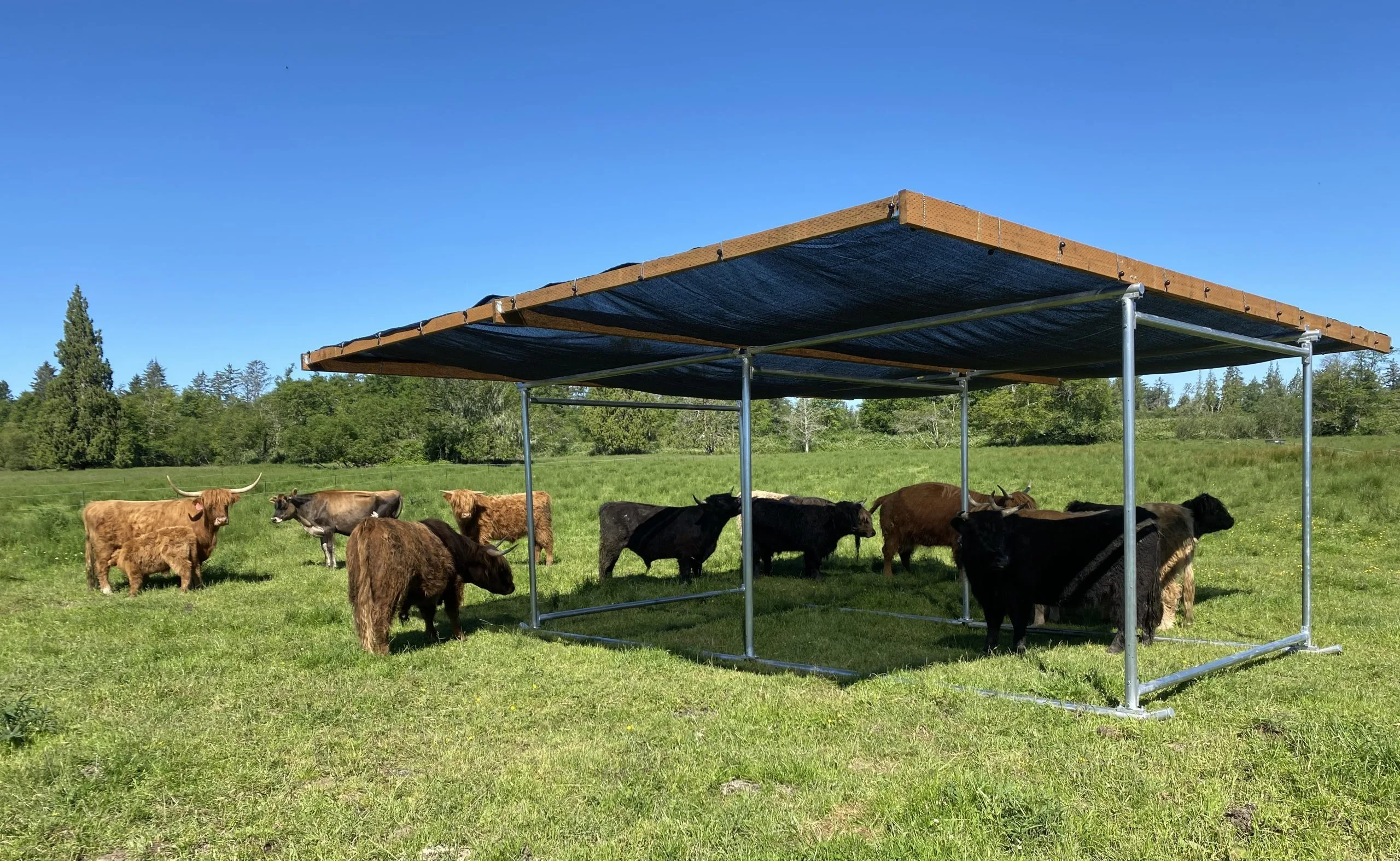
Image from www.klenepipe.com.
Frequently Asked Questions
Farmers new to grazing mobiles tend to have the same practical questions before committing to a build or purchase. The answers below cover the most common decision points based on how these systems actually perform across different operation types and grazing models.
Understanding how a grazing mobile fits your specific situation — your animal species, your acreage, your rotation style — matters more than any general recommendation. Use these answers as a framework for evaluating fit, not as a universal prescription.
What Animals Can Grazing Mobiles Be Used With in Rotational Systems?
Grazing mobiles are used successfully across a wide range of livestock species. Cattle operations — particularly beef cow-calf and stocker operations — are the most common application, but sheep, goats, pigs, and pastured poultry all benefit from mobile infrastructure in rotational systems. Pastured poultry operations, in particular, have used mobile shelters as a core system component for decades, with units like the classic Joel Salatin-style chicken tractor serving essentially the same functional role as a grazing mobile for larger livestock. The design requirements differ by species — poultry mobiles prioritize predator protection and ventilation, while cattle mobiles prioritize structural durability and water capacity — but the underlying labor-saving logic is identical across all of them.
How Often Do You Need to Move a Grazing Mobile Between Paddocks?
The move frequency for a grazing mobile matches the move frequency of your rotation — which is determined by your stocking rate, paddock size, and forage removal goals, not by the mobile itself. In high-intensity, low-frequency (HILF) systems, moves might happen every seven to fourteen days. In adaptive multi-paddock (AMP) systems, moves can happen daily. The grazing mobile needs to be designed with your specific move frequency in mind. A unit that requires significant disassembly or a large tractor to reposition is not practical for daily moves. A skid-mounted unit that can be dragged by an ATV or small utility tractor is well-suited to frequent transitions. Match the mobility design of the unit to the actual demands of your rotation schedule before you build or buy.
Can Grazing Mobiles Be Used in Both HILF and LIHF Rotational Systems?
Yes, but they serve somewhat different functions in each system type. In high-intensity, low-frequency (HILF) systems — where large numbers of animals graze a paddock intensively for a short period before a long recovery — the grazing mobile primarily reduces the labor of transitioning a large herd between widely spaced paddock locations. The move frequency is lower, so the per-move labor savings matter less on a daily basis but still add up significantly across a full season.
In low-intensity, high-frequency (LIHF) systems, where smaller groups move through paddocks more frequently, the grazing mobile delivers its most consistent daily value. Every move is streamlined, water is always in position, and the herd’s behavioral orientation to the mobile makes frequent transitions genuinely low-effort. LIHF systems are where the seasonal labor savings tend to be most dramatic in absolute hours.
The physical design of the grazing mobile may need to differ between these two system types. HILF operations moving large cattle herds every ten to fourteen days can use heavier, more feature-rich units because repositioning happens less often. LIHF operations benefit from lighter, faster-moving designs that prioritize ease of relocation over structural complexity. Consider your system type when evaluating grazing mobile designs.
- HILF systems: Heavier builds acceptable — moves are infrequent, so repositioning ease is less critical than capacity and durability.
- LIHF systems: Lightweight, fast-moving designs are essential — daily or every-other-day moves require units that reposition in minutes, not hours.
- AMP grazing: Drag hose water integration and skid-frame or wheel-kit mobility are near-mandatory for daily-move viability.
- Both system types benefit from integrated water delivery — the labor savings on water handling are consistent regardless of move frequency.
Do Grazing Mobiles Work on Small Acreage Farms?
Grazing mobiles are often assumed to be tools for large-scale operations, but they are genuinely well-suited to small acreage farms — sometimes more so. On small acreage, every hour of labor is felt more acutely because there are fewer people to absorb it. A two- or three-person operation running a tight rotational system on 20 to 50 acres benefits from the same labor efficiencies that a larger operation does, scaled to their context.
The design scale simply adjusts to fit. A small acreage operation running a dozen sheep or a small beef herd does not need a $9,000 commercial grazing mobile. A well-built DIY skid shelter with a 100-gallon poly tank, a float valve, and a simple tow hitch can accomplish the same functional goal for under $1,000 in materials. The key is that even at small scale, the behavioral attractor effect of the mobile still works — livestock orient to the unit, transitions stay low-stress, and fencing pressure decreases in the same proportional way.
Terrain matters more on small acreage farms than on large ones. If your paddock layout involves steep slopes, wet areas, or significant obstacles, the mobility design of your grazing mobile needs to account for those conditions specifically. A wheeled trailer unit may struggle where a skid-frame drag unit performs well, and vice versa. Evaluate your terrain honestly before committing to a design.
- Small acreage operations (under 50 acres) can build functional grazing mobiles for $800 – $1,500 in materials with basic fabrication skills.
- A 100- to 200-gallon poly tank with a float valve is adequate water capacity for most small herd sizes across a standard paddock day.
- Skid-frame designs towed by an ATV or compact tractor are the most versatile option for varied small-farm terrain.
- The behavioral attractor effect works at any herd size — small herds orient to the mobile just as predictably as large ones.
Small acreage farmers should also consider that a grazing mobile can double as a feeding station during winter or drought supplementation periods, extending its functional value well beyond the active grazing season and improving the cost-per-use calculation significantly.
What Is the Difference Between a Grazing Mobile and a Standard Portable Shelter?
A standard portable shelter is designed to be moved periodically — typically a few times per season — to prevent excessive mud and manure buildup in a single location. It prioritizes animal protection from weather and has no functional integration with the grazing system itself. You move it when the ground around it gets too compacted or fouled, not as part of a planned rotation sequence.
A grazing mobile is fundamentally different in intent and design. It is built to move as part of the rotation — frequently, predictably, and with minimal effort. The move is not reactive (responding to ground condition problems) but proactive (driving the paddock transition). This shift in purpose changes the entire design brief: mobility hardware, weight distribution, water integration, and hitch compatibility all become primary design considerations rather than afterthoughts.
The most important practical difference is the water system. A standard portable shelter has no water delivery function — water is handled separately. A true grazing mobile integrates water delivery so that relocating the unit also relocates the water supply. This integration is what enables the labor savings described throughout this article, and it is the clearest single feature that distinguishes a purpose-built grazing mobile from a shelter that simply happens to have wheels or skids.
Featured Image from www.agproud.com.

Related Posts
-
 5 Off-Grid Ways to Keep Your Chickens Warm This Winter
-
 3 Tips for Raising Alpacas On Your Homestead
-
 Impact & Benefits of Rotational Water Troughs for Livestock Health
-
 Save Money & Raise Healthier Chickens with Fermented Feed
-
 Homemade Whole-Grain Chicken Feed Recipe (Corn-Free)
-
 Holistic Herding Techniques: How to Effectively Manage Multi-Species Grazing
